Thursday, 23 August 2012

Canadian Museum of Flight

In January 2008 I visited the Canadian Museum of Flight in Langley, BC with my brother who then lived in Vancouver. It's a small museum, but has a nice collection with some interesting bits you won't find as easily in Europe.

I'm putting up some of the pictures, but as I'm no expert on aviation, I won't be able to dish out on details. I've provided links to the excellent website of the museum if you want to know more.

Canadian Quicky, a homebuilt design from the 1970s. It still looks cool.


Beechcraft 3NMT Expeditor, a Canadian C-45 in ample use


Canadair CT-114 Tutor. This plane was used by the Snowbirds, the RCAF demonstration team, in the 1970s


Avro Canada CF-100 Canuck
, a Canadian designed and built aircraft from around 1950


Replica of SE5A


Wednesday, 22 August 2012

"Western" boardgaming and egalitarianism

Sagrilarius put some interesting questions in his blog " The Culture of Gaming, and Vice Versa". I was struck especially by one point he made, in that "western" society doesn't accept hierarchical games.

Sagrilarius wrote: "Games with binding contracts or hierarchical player roles are simply unheard of in the genre, not because they aren't fundamentally sound, but because they simply don't occur to the usual suspects that drive boardgaming's technological progress. Not just a eurogame thing, this a western game thing." Not to leave my thoughts in the comments section, I put them up here.


The comment may strike true for boardgames (although the Great Dalmuti springs to mind as the obvious exception) but is patently untrue if you look at other forms of gaming. In games with many players there is the opportunity for both hierarchical and 'contractual' relationships.

If you look at the mass player games occuring online, the hierarchical (and diplomatic) aspects are very clear, with structures like guilds, corporations, alliances and clans. In these structures some players take leading roles, whether formally or informally. Another aspect is specialisation of character types and team balance.

Another form of gaming which is inherently hierarchical is megagaming , games which involved 25 players and more. Player are grouped in hierarchies of teams, which in turn are hierarchical. In "The Last War ", a two day game about the latter half of WWII, about 150 players were grouped into 35 political or military teams , ranging for example from Roosevelt's cabinet through the Joint Chiefs of Staff to theater headquarters.

In both types of games players seem to happily accept the different roles, some relishing in the opportunity to exert leadership, others preferring to stay out of the limelight. Some people take pride in the team effort.

Of course, problems do occur when arguments start. Because this is only a game, and not real life, the extent to which players accept formal authority is limited. And even though there are limits to formal authority in real life (think of Guderian pushing on to the Channel Coast in May 1940, despite orders to halt), the options to punish players for disloyalty and insubordination in games are much less. On the other hand there is greater opportunity for players to excel on merrit, charisma, setting the example or by taking the lead.

I think the lack of hierarchy in boardgames has more to do with the format of a small group of players that need about an even chance of winning, than with cultural traits. Interestingly, informal hierarchy also works with semi-cooperative boardgames, especially if connected to special powers connected to certain offices, like in Republic of Rome and Battlestar Galactica.


So while there is a cultural propensity in the west for egalitarianism, it is not absolute, and it would be very interesting to see comparative studies of gaming culture, just like is being done for business culture (where for example the German business culture is more hierarchical than the Dutch). Do Chinese MMRPG player groups have different forms of organisations than Americans, or British?

There is an academic literature building up that looks at these kinds of dynamic in computer games, but I'm not sure it's as easy to do the same for boardgames.

An earlier version of this post was published on Fortress Ameritrash

Monday, 20 August 2012

Ray and Fran's 20 questions

Life's slowing down a bit after holidays (I hope you enjoyed the pictures I posted, it was a fun way of updating whilst on the move) and a festival. I hope to have more spare evenings to write posts.

But before resuming normal service, Here's my take at the 20 questions by Ray and Fran

Favourite Wargaming period and why?
Pffff, that's mostly dependent on whether the rules are cool. I'd still love to do Great Paraguyan War and the Risorgimento Wars (1848-1870).

Next period, money no object?
Money is not the problem, as I've made clear from the start. Time is. So money would be spent on getting good painters to do useful stuff and with no time/money constraints I could splash out on terrain and fringe miniatures, like camp followers, wagons and civilians. That's what I always stayed clear off.


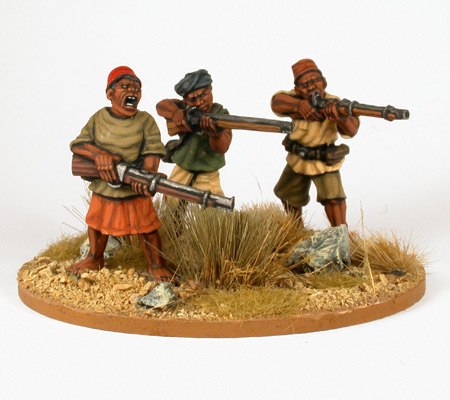
Probably I'd prefer a skirmishing period with lots of opportunities for scenario's. When Foundry came out with the beautiful Darkest Africa range, I had this fantasy of doing a campaign with explorers, carriers, slave traders, shady business men, some wild animals and of course a many war parties, both European and African. Add to this terrain and buildings for savannah, desert and rain forest, fortresses and huts...

Oh well. That or a Skaven Mordheim warband with loads of interesting monsters and adventurers for endless roleplaying fun.

Favourite 5 films?
Big Lebowski (that's just like... your opinion, man!)
Once Upon A Time in America (the scene where the kid eats his cake while waiting for the prostitute)
Cross of Iron (My platoon? You are my platoon now)
Once Upon a Time in the West (So you found out you're not a business man after all? Just a man)
Alien


Favourite 5 TV series?
I haven't owned a TV in 20 years, so it'll be old stuff:
The Young Ones
Saphir and Steel
Ren & Stimpy
Jan J de Bom, voorheen de kindervriend
Twin Peaks


Favourite book and author?
Fantasy:
Terry Pratchett - Discworld series

Military history:
Martin van Creveld - Supplying War, not because it's the best book, but because it broke the ground and opened my eyes to the subject of logistics
Archer Jones - The Art of War in the Western World, shaped my view of military history and gave me a framework
Lawrence Keeley - War Before Civilization, shows how politics and graft are a small price to pay for peace

Historical atlasses:
Westerman's Grosser Atlas zur Weltgeschichte, shaped the world for me. I can still draw blind maps of the German states at various points in time. Or classic campaigns and battles. All learned from this book. It also inspired my paper on the Brandenburg West Indian Company (which you probably hadn't heard off).

History:
Jan de Vries - European Urbanization, 1500-1800, I still love those maps of urbanisation at various points in time. Opened my mind to historical geography.
Charles Tilly - Coercion, Capital and European States, AD 990-1992, on the link between warfare, urbanisation and state formation. Notice the link to Van Crevelds Supplying War!


Greatest General? Can’t count yourself!!
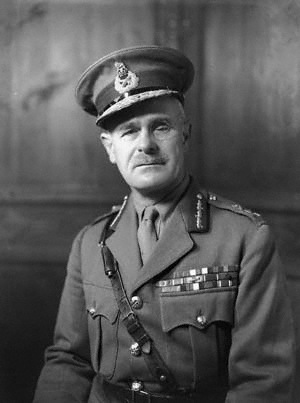
I have a fascination with Wavell, and his challenges in 1940/1: Western Desert, East Africa, Iraq, Syria, Greece, Crete. Probably not the greatest, but those are not always the most interesting.


Favourite Wargames rules?
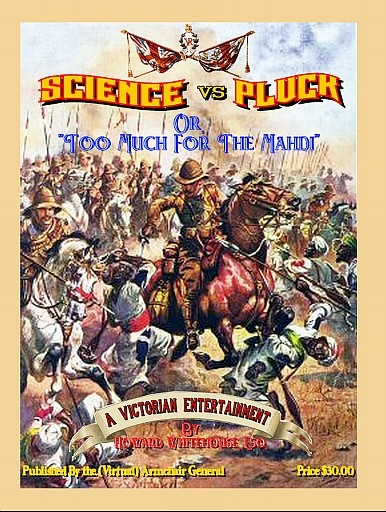
Science vs Pluck
Bag the Hun (1st Edition)


Favourite Sport and team?
(field) hockey. I sort of support/follow Fiorentina in the Serie A, QPR in the Premier League, the Canucks in the NHL, England in cricket.

If you had a only use once time machine, when and where would you go?
The Big Bang, to go out with a bang!

Last meal on Death Row!
Hemlock

Fantasy relationship and why?
Cameron Diaz. That smile


If your life were a movie, who would play you?
Michael Fassbender


Favourite Comic Superhero?
Dylan Dog - Indigatore de l'incubi


Favourite Military quote?
"C'est magnifique, mais c'est ne pas la guerre" - French General Bosquet, while watching the charge of the Light Brigade at the battle of Balaclava.

Historical destination to visit?
Inca remains and battlefields of the Wars of Liberation in the Andes

Biggest Wargaming Regret?
All the unfinished projects

Favourite Fantasy job?
Corporate PR at Barclays Bank - a challenge

Favourite Song, Top 5?
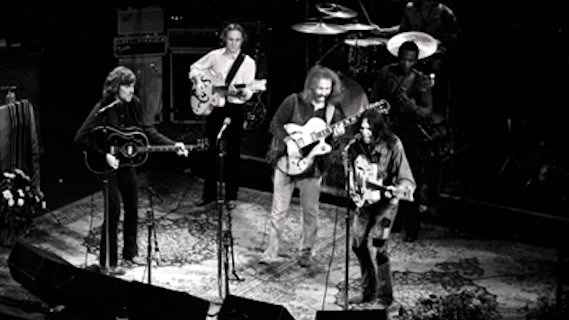
Crosby, Stills, Nash & Young - The Lee Shore
Rolling Stones - Gimme Shelter
The The - Kingdom of Rain
Neil Finn - Try Whistling This acoustic version on some radio show
Beatles - Dear Prudence
Wilco - Impossible Germany


Favourite wargaming moment!
Kirovograd megagame, January 1994. A life changing experience that got me hooked on megagaming.

The miserable Git question, what upsets you?
Don't get me started

Friday, 17 August 2012

The opening of the Memorial for le Mille on May 9th 1915

On May 9th 1915, the monument was christened for the 1,000 redshirts that accompanied Garibaldi on his trip to Sicily in 1860, beginning the 'liberation' of Southern Italy.

I put liberation in quotations because it soon became clear that the replacement of the Bourbon dynasty with that of Savoy didn't make that much of a difference to the Apulians, Sicilians and Calabrians. For decades the new Italian army was involved in putting down the ongoing revolt in the south, and banditism continued well into the 20th century.

The opening ceremony stood in the light of the Italian intervention in WWI at the side of the Entente. Italy had been allied to Germany and Austria-Hungary since 1882 but now opportunistically threw its weight on the other side, claiming not only the Trentino, Friuli and Triëste, but large parts of the Dalmatian coast in the secret treaty with Great Britain and France.

Gabriele d'Annunzio, Italy's most famous poet was recalled from Paris to whip up public fervour for war. France paid off his debts so he wouldn't be arrested.

On May 9th he promised, demanded bloody sacrifice: 'Blessed are the merciful, for they shall have splendid blood to wipe away, radiant pain to bind up'.

I'd think d'Annunzio got what he wanted. By 1918 over 670,000 Italians had lost their lives.

Thursday, 16 August 2012

Alpini, Go Home!


The Alpini are the Italian elite mountain troops. They earned their distinctions during the mountain battles of WWI, but also elsewhere in WWII. I've come across quite a few memorials in Italian towns and villages specifically for them.

They have characteristic hats with a feather. You can almost make it out in the picture.

However, the love is not universal, as you can see. Taken in Genova last week.

Wednesday, 15 August 2012

L'Armee de l'Orient

Picked this one up in Levanto on Saturday in a huge stack of second hand books. Interesting to kniw how it ended up there.

This is the account of Sarrail's command of the Armee de l'Orient in Macedonia from late 1915 to spring 1918. Published in 1920.

Sarrail was reluctant to go there, as he had been relieved of his army command on the west front and this was obviously a side show. He demanded and got an army command, more troops and independence from the Brits.

Saturday, 11 August 2012

Uniform of the Carabinieri Genovese

The Carabinieri Genovese were formed in 1851 as a rifle association.

The club was heavily influenced by the desire for Italian unity and many members were involved in the failed 1857 plot in Milan, Garibaldi's Cacciatory delle Alpi in 1859 and the Mille that set sail for Sicily with Garibaldi in 1860.

The uniform is on display in the Risorgimento museum in Genova.

Friday, 10 August 2012

Mussolini at the helm

Another fine painting from the Wolfsonia collection in Nervi.

Close to the outbreak of WWII, this shows Mussolini at the helm (it's called 'Il Nocchiero').

I like it a lot, with the crazy references to barbed wire, but also airplanes and the map of Europe.

Thursday, 9 August 2012

Fascist fascination with flight

This painting from the Wolfsonia collection in Genova-Nervi shows how the Futurist obsession with movement and action perfectly fitted fascism.

It is hard to separate the ideas of Futurism, which are grotesque and become soiled with fascist ideology, from the products, which are beautiful.

I went back early this morning to Nervi, just to see this collection, because I think it's a brilliant combination of design objects, graphics and more conventional forms of art. The trip was well worth the trouble.

I had to rush back for the train to Levanto.