Okay, you might not get what half of these are about, but that doesn't matter: over a dozen entries to my request to use the Pulp-O-Mizer for the greater good of the world! And a few excellent ones I hope to see again in some other place.
Most of these refer to Jim Wallman´s Universe campaigns and should leave innocent bystanders clueless as to the names and places mentioned. Don´t worry about it. If you are intreagued, try the Universe Encyclopedia or the Interstellar News Network for an update of major events that are being allured to. See for example Senator Antoinette Banderas from the Martian Union.
They reflect an ongoing debate in a far flung galaxy some time in the future about the dangers and potential of artificial intelligence, by some messed up with a renunciation by some (obviously less enlightened characters) of entirely harmless forms of AI found in useful applications such as the dombot (domestic robot).
Enjoy (and try for yourself!).
By Jim
, Universe campaign
By Andrew, for political incitement
By Barbara, for the heck of it
By Barbara, for the heck of it
By Jeff, for his movie reviews
By Jim
, Universe campaign
By Tom
, Universe campaign
By me, for an occassional meeting of Dutch wargamers
History can be harsh on the powerful, and it's part and parcel of being up on the hill. But some 'great men' (and a disproportionate amount of great women) get a worse treatment than others and that may be a bit unfair.
Even redemption at the hands of the press may come in unfair ways. King Richard III owes much of his new popularity to the novelty of his discovery under a car park in Leicester. A surprising PR move for a man more used to riding horses on unpaved roads.
Humble Scribe, in another excellent post, asks the question why King John has not received a similar revival. While the historical record has been very negative for him, this is largely due of him not being around and his haters holding the quill. John was an able administrator and general as recorded in Ralph Turner's King John: England´s Evil King?, but this is overlooked because of his major character failings.
Popular perception might have to do more with representations in literature and movies than history books. As many people have noted, Shakespeare has been instrumental in demonising both Richard III and John, while Walter Scott's depictions of John and his henchmen in Robin Hood confirmed this in the 19th century. 20th century writers and directors have used these images rather than provide reinterpretations.
This durability of historical stereotypes is also manifest in the appreciation of Willem, Hereditary Prince of Orange and later King Willem II of the Netherlands. Demetrius Boulger, in his 1904 article on 'the Belgians at Waterloo' notes that Siborne, Maclachlan and Alison have been the principal culprits in attributing the failures of the campaign to the Netherlands troops and Willem in particular.
But according to Boulger the greatest damage was done by Thackeray reproducing them in Vanity Fair. And it is easy to see when British writers in the 1960s and 70s uncritically adopt this perspective. Luckily, the image is now being rectified somewhat (of course, Willem hasn't suddenly become a great commander) by closer study of individual accounts of the battle.
By the way, if you're on facebook and have an interest in restoring King John to his rightful place in history, why not join the King John Appreciation Society?
And as a fitting farewell to King Richard, the song dedicated to him by Supergrass. A fittingly brilliant one!
Despite the generous amounts of rum and cutlasses going round in this game, it is very well behaved. In fact, it's a bit dull.
Don't be fooled by the box, no violence in this game. At all
This is a worker placement game, where players bid their
doubloons
and rum on the favour of five members of the ship´s crew. Each of them offers different rewards for the highest and second highest bidder. Cutlasses which you need to win, rum that you can use for bidding, the ability to give extra resources to players, or to take them away, a tie breaker, and extra doubloons. The first of the crew members also allows you to move some of your doubloons around, allowing you to win a tied bit later on.
The turn is straightforward: first five blind biddings on the characters. The bids are then resolved one at a time to determine the winners and second places, who get their rewards immediately before resolving the next character. Then the next turn starts. You get your doubloons back every turn, but rum used for bidding is lost.
When one or more players have gathered at least 7 cutlasses, the game ends. The player with the most cutlasses wins, with the doubloons and rum as tie breakers.
The game should balance itself through the bidding system, but that doesn't always work. When you've got five or six cutlasses, it's easy to bid everything on the crew member that rewards you with cutlasses because it is unlikely that all other players will be committing all their resources to stop you. There's a good chance you'll gain at least one cutlass or even two.
The advantage of this game that it is easy to learn, and quick to play. It is a streamlined design (by Kevin Wilson) with no fat on the bones, but therefor it also not so rewarding.
This is a laugh. The Pulp-O-Mizer design your own pulp magazine cover.
First attempt
I did this first one from their site in 5-10 minutes, and it was so much fun I had to share with you. Let me know in the comments if you made one as well! To the Pulp-O-Mizer!
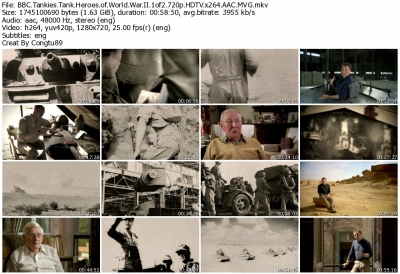
A few days ago I went to Michiel's place and together we watched the Tankies documentary by Mark Urban followed by a Dutch documentary Prikkeldraad (Barbed Wire) by Bob Entrop.
Cover of the Prikkeldraad book
In Tankies, Urban follows a number of troopers from the 5th Royal Tank Regiment through France, the Western Desert, Italy, France, Belgium and Germany based on diaries, letters and interviews. There´s lots of talk about experiences fo combat, but also of the training, the type of tanks they used and how it compared to their opponents.
The Prikkeldaad documentary was based around a book with the same name, published shortly after the war. It held the reminiscences, water colours, songs, sometimes photographs, of many men that had gone gone through one of the main Dutch POW camps, between Berlin and Magdeburg.
My granddad claimed to have contributed some photographs to the book, but he lost all his stuff on his trip back. As far as I understand he spent time in the Ukraine and was liberated by the Soviets somewhere in Bohemia. He then made his way back home through Saxony. After the war he never bought the book, but much later I found a copy and gave it to him.
There were interesting differences and similarities between the documentaries. Both concerned WWII and featured interviews with survivors, men in their 90s. The image they paint of war is not a rosy picture and sometimes very emotional. Only few of them didn't show emotion at some point. Guilt, anger, relief, pride, joy and loss were all there, even though many of them tried to remain calm and dignified most of the time. However, seeing people killed around you and looking death in the eye affects you.
There were differences as well. While the British soldier talked mostly about combat, the Dutch POWs were always talking about food. The food they loved most and the food they needed to get and the ways to get it. Some entered the black market, many stole. From the Germans, but also their comrades.
But the most marked difference is probably that between victors and vanquished. While the British tankies may have lost battles or at some point admitted they felt that they'd done their bit, overall they looked on that period with pride and satisfaction. One even remarked that some of the happiest moments of his life were in the war, being young and having large amounts of time where you had nothing else to think about.
On the other hand all the Dutchmen felt a need to justify their decision to move back into German custody as POWs in 1943, to work in the Nazi war industry. Why didn't they try to elope and hide, as some were able to do? Given that hiding 10,000s of men would have been impossible in a small, urbanised country like the Netherlands, I can't really blame them. They were also made to understand, implicitely, that their absconding would be taken out on their families.
I understand a bit how hard that decision must have been on time because my grandfather had been a soldier in 1940 too, and he went to Germany when called up. I know he felt he needed to justify that decision. He bore that decision with a sense of shame.
A water colour made by Bob Entrop, author of the book and grandfather of the guy who made the documentary
But let's not make light of the plight of the Dutch POWs. Even if they weren't imprisoned as long as the Poles or the French, and not nearly treated as bad as the Russians, only a third of them came back. Hunger and illness weakened and killed, but so did hard and sometimes very dangerous labour. Dangerous labour means recovering unexploded bombs in German towns and working in strategic facilities that were bombed themselves.
My granddad told a story of two comrades who refused to leave their barracks during a raid and got killed. In another instance, the Germans guards that had denied the POWs access to their shelter had been drowned and cooked in petrol. My grandmother added that he used to have nightmares long after the war.
But the experience of losing a war and becoming a POW seems rob you of a sense of pride and accomplishment. Strangely enough, little attention was paid by Urban to the two guys that were taken POW during the war, because their story might have been much more like that of the Dutch. The democratisation of the memory of war
But what these documentaries told me is the incredible change we´ve seen in the ´writing´ of history since that war. The initial version of the war was based on the wartime propaganda, which was then filled in with official histories and the books by leading generals which appeared in the 1950s the 1960s.
But then the cracks appeared in the story, with a new generation of historians lancing the boils of controversy that had been hidden from public view until then. And after that we saw the first books by and interviews with the ´ordinary´ men involved. This was partly driven by a wish among some historians to write the history of common people, and so of the rank and file of the armies. And when these memories started disappearing as veterans started retiring and dying of old age, there developed a need to preserve their stories for later generations.
Stills from Tankies
This need was especially felt among holocaust survivors, because in many ways they provided proof of what had really happened. It spilled over towards resistance fighters servicemen, in the Dutch case by men like Brongers who felt that the stories of heroic deeds would off set the sentiment that the Dutch army had been weak and just fell over when attacked.
Later the historical record became more nuanced, and more room appeared for grey areas, like the killing of POWs (see for example Saving Private Ryan). This also mirrored a change in military history writing that focussed on the experience of battle of the rank and file, and from there on spread to tactics, doctrine and leadership as opposed to the (grand) strategic questions which seemed settled by the debates of the 1960s and 1970s.
But this also involved the black sheep, for example in the Netherlands men who had joined the Waffen SS were interviewed a book by Armando in 1967. It was shocking then to many people on principle of giving these bad people a voice at all. Since then more books and documentaries have appeared, like this 2011 documentary with interviews with Dutch SS members.
The focus on people´s memories has its pitfalls, because our knowledge of memory has made us much more suspicious of the truth we can wrest from them. I remember a story my granddad told me of a major walking upright in the middle of the field during an attack on the Ypenburg airfield in May 1940. It matched a story I had read in a book on the fighting and I wonder whether my granddad had really seen this happening, or later included it on the basis of stories he'd heard or read.
And looking back years after the events will cloud the story in more ways. But that doesn´t mean that memories are useless. A good historian should at least try to corroborate the facts. And the memories themselves are valuable, the emotions and the justifications.
I sometimes wish we´d have that kind of memories for many more ´ordinary´ people in history. It might look something like this....
Watched Target For Today, the 1944 propaganda movie on the 8th Army Air Force, although it does well as a documentary. It runs one and a half hours. The great thing is: it's on Youtube.
Amazingly, the movie spends most of the time on the ground. The first half of the movie describes the planning of the raid, from the Air force level down to the groups and planes. Very instructive to know at what level certain decisions were made, eg choice of targets, bomb type and load, setting of fuses etc.
It also shows what a professional and administrative machine this force was.
And when the planes get airborne, there's pretty extensive discussion on formations. The movie explains how wing formations are broken up on approach to the target and reformed afterwards. It ends with lots of stuff also on Air Sea Rescue and debrief of bombing effect and enemy tactics.
As far as I'm concerned a must see for anyone interested in WWII bombing.
History of
the World is a fun game, with little pretentions. In its original version (which
I once owned) it had cardboard counters and a cloth map, but the later Avalon
Hill version has got a mass of plastic dudes and a proper reinforced mapboard.
Opening stages of our game before Christmas
The game is
driven by the repeated appearance of new peoples on the map. In each of the 7
ages (from the Bronze age to the Industrial), as many new peoples enter the map
as there are players. As there are ample peoples per age, not every
civilization will show up, so you can have a game without the Romans making
their mark.
Every time
your civilization appears, you place an army in its starting area (eg Nile
Delta for the Egyptians) and then try to conquer neighbouring areas in a combat
system reminiscent of Risk. You go on until you run out of armies and collect
points for that civilization, but also for your earlier civilizations still on
the board.
As the eras
change, so does the value of areas. While the Middle East areas score high
early on, China is worth a
lot in the middle of the game, and Europe by
the end.
Halfway through the game. My high point, with the Romans (purple) hanging on for some time.
The Sung
dynasty doesn’t come with as many armies as the Persians, and the Dutch come
with a pathetic few. So which civilization you get determines your combat
power.
The
mechanism that balances this out is the fact that the player with the fewest
points draws first from the deck of civilizations for the next era, and decides
to keep it or to give it away. If you get a good one you keep it, if you draw a
bad one you hand it to a front runner.
On the
other hand, the French come before the Germans in the turn and thus get to
score points before them as well. If you’ve just made a big splash at the end
of last turn, even a weak civilization can help you to score big again if it
occurs before others can destroy the old civilization.
So the
allocation of civilizations is the central issue of the game, and because you
can’t know which civilizations will be picked, you sometimes get it wrong. You pass
on the Greeks because the Romans are still in the deck and someone else might hand
them to you, but instead you end up with the Celts.
Late in the game. The map has filled up, even towards Australia. Red has done well despite being almost taken out at the end
There’s
some influence you have over results through event cards, and in this game a +1
on the dice roll can significantly improve your success. A few extra armies as
well. So use them for the best possible effect. There’s also a few minor
civilizations that allow you a few extra points, or even a lot when you can set
them up in the right position.
The game is
mostly about combat, although some culture has been injected by the monuments
you can build for every two resource areas your people control.
With all
the dice rolling, direct conflict, asymmetric capabilities of the different
peoples and possibility of kingmaking and runaway leaders it is an Ameritrash
classic. However, it has remained in the shadow of its contemporary rival Civilization,
although I imagine that in terms of sales and games actually played it might
have done better. In many a sense World Conquerors, which I played in Essen, is similar in
concept and complexity.
The benefit
of the game is that it can be played in an evening, but the drawback is that it
hasn’t got much strategic choices. The situation on the board changes rapidly,
which means you have to think before each new civilization and this causes some
analysis paralysis and downtime. A game you can draw out once in a while, but
won’t play to death.
Went to see Django Unchained last week and enjoyed it a lot. The latest movie by Quentin Tarantino is
again
a masterpiece of imagery and storytelling.
The outstanding points for me were the fantastic story, another great musical score, the performances by Leonardo di Caprio, Samuel Jackson and Christoph Waltz. Especially the first two seem to revel in the opportunity to play a bad guy, while Waltz makes an almost sentimental volte face from his Hans Landa role.
He´s bad and he likes it
There's many other good bits of acting. Don Johnson continues his silent comeback with hilarious redneck cameos (like in Machete). Jamie Foxx is good, but he isn´t allowed much room for manouver as the stoic avenger.
The action scenes are very good and the hyperrealism (splatter) matches the incredible story. Also, Django is less a movie about western movies than Kill Bill was a movie about classic martial arts movies and Inglorious Basterds was a movie about 1960s and 1970s war movies.
Tarantino pulls no punches on Southern slave society. The abominal treatment of blacks is in your face, with the brutal mandingo wrestling not even the worst. The white people in the movie generally have few redeeming qualities, if any. You feel like cheering when they die.
And regarding the supposed controversy of the use of the n-word, why is nobody complaining about this: "killing white people and get paid for it. What's not to like?"?
One of the weaker points, to me, was the ending, with the sale to the mining company and the unlikely escape (and terrible acting by Tarantino!). Jackson's monologue on saving Django's life doesn't come out as good as Christopher Walken's brilliant watch monologue in Pulp Fiction.
There isn't a scene to match the shocking dynamics of the opening of Inglorious Basterds, or the "Dick, dick, dick, dick, dick" discussion from Reservoir Dogs. Nor does it have the one-liners.
Maybe the parts with Di Caprio are a bit too long as compared to the rest of the story. I can see how the excellent acting could tempt Tarantino into giving it as much room as possible, but to me it unbalanced the movie. They could have taken longer to find and deal with the Brittle brothers, as far as I´m concerned.
At times Tarantino even seems pretentious, trying to link it the story to the Siegfried saga, bringing up Mahler and Beethoven and showing his knowledge of European classic culture: "by the way, Alexandre Dumas was black".
It´s a bit of a pity that this isn´t Tarantino´s first movie, because were used to the continuous references to other movies, his choreography of violence and the dialogues. We start nagging about the less delightful bits and lose perspective of the whole.
So, in all this is a great movie, with great acting but with fewer stand out moments than we´re used to with Tarantino.
January has been a bit of a quiet month for this, with holidays and new week schedule messing up my rythm. A backlog of sessions and reviews built up, frustration set in. But I'm finally getting back on track of more frequent postings.
All this doesn't mean I've been idle. On the contrary, I've done a lot of reading, among which a great master thesis on the French cavalry in the 1813 campaign which challenges the current consensus that Napoleon's shortage of cavalry was a problem of supply. Included is a very useful explanation of the Napoleonic system of acquiring horses and its success to rebuild the army after the catastrophy of 1812.
Picked these up last week. On the left book on the Dutch revolution. Yes, that's right. Before the French one
I've also read one or two articles on the Dutch army of the Batavian Republic (1795-1806), continued in Lieven's Russia Against Napoleon and started in Zamoyski's Rites of Peace. I've gone more than halfway now in a few day because it's such an pleasant read.
I've also played Manhattan Project and 7 Wonders last weekend, so I'm even occasionally enjoying my games.
Prize of the auction: a stack of Al Qadim expansions for AD&D
My club organised a very successful auction, where I picked up a few miniatures. Afterwards we had a drink with our new roommates from Societé La Grande Armee, another miniature wargames group that has lost their home. They might move on to a new location, but there´s also a chance they´ll join us for good in a few months. It was a lot of fun getting to know each other, and talking to people we hadn´t seen in a while.
Furthermore, my reading of stuff on the 1812-15 period makes me eager to game that period as well. I've seen some beautiful 28mm Prussians from Calpe Miniatures and some excellent rarities from Westfalia. These are both small, parttime initiatives with high quality sculpts and I feel good about supporting them, even though a box of plastic Perry or Warlord would be cheaper..
Westfalia Prussian medical team, pic from their website
I've given in to temptation on the understanding that all I'm going to do is a bit of skirmish, so I can limit my purchase to around 50 miniatures. The Calpe Landwehr are excellent and having Westfalia's Prussian doctors around will make that complete. I´ll worry about painting later. There's no rush
I noticed last week that I´ve passed the 10,000 hits barrier, which is still a miracle to me. I´m still picking up new followers, so that´s good too. Thanks to all of you, reading and commenting.
On a trip to Antwerp over a week ago, we visited a few interesting places, like the excellent MAS (Museum aan de Stroom), with a rich combination of four collections stretching from anthropology (international and local) to local history. And Antwerp has a illustrious history as the greatest and richest port of Europe in the late Middle Ages.
A 17th century interpretation by Antwerp painter David Teniers
You can still find many remains of that golden age around the city, and one of the best places is the Mayer van den Bergh house, which holds a small but excellent collection of medieval and early modern art. The collector after whom the house is named started to buy all these art objects on business trips. He didn't think like a museum director, pursuing a direction and filling in gaps, but bought what was available through local traders and other collectors, all based on his personal preferences.
This means there is stuff from the Low Countries down to France, Germany, Switzerland and Italy and the objects range from religious objects to bourgeois furniture. I stood amazed watching a piece of beautifully crafted ivory from the 10th century, which had been carved in the back of an Byzantine original from a century earlier.
The Dulle Griet
But the top stuff are a couple of paintings by Pieter Bruegel, the most famous being the Dulle Griet, an apocalyptic view with an armed and armoured women carrying her spoils across it. I easily spent a quarter of an hour enjoying this.
But there's another bit that I found interesting, which were a couple of paintings showing the temptation of Anthony the Abbot, one of the founders of the Christian monasterial tradition. It was a theme I hadn't noticed before, but which happens to have been popular in the Middle Ages, but also inspired Dali.
Bruegel's take on the temptations of Anthony the Abbot
The reason why I was so interested is because it shows contemporary views on what monsters and demons would look like and I am fascinated. The monsters are all a bit comical, rather than scary. There´s a brilliant site on Anthony with lots of illustrations of paintings over the ages. Below I post one from 1490 that I actually like best, because it is so different from contemporary paintings. The colours are so bold and the monsters so stylised! It made me think of Indian art.