Since last month I am the lucky owner of three large, historical posters. They're from a series of widely known school posters, used for history lessons in the old days (the first ones were printed over a century ago). They show episodes in the (military) history of the Netherlands that were considered important at the time..
The first I won in a quiz. It is a complicated story, but it all comes down to the question not being related to the event depicted on the poster. Thanks anyway, Peter. The poster is in fact of the relief of Leiden in 1574. This is probably around the current Lammenschans (ie redoubt). In the distance you can see the main churches.
The other posters I got from my old house mate and friend Mat. The first depicts the crossing of the frozen River Lek by the French Revolutionary forces in January 1795. This broke the defense of the regime of the house of Orange and gave way to the Batavian Republic, a French client state, but also the unitarian ancestor of the later Kingdom of the Netherlands.
The last poster deals with an equally cold episode from the Napoleonic Wars, as the Dutch infantry defends the crossings of the Berezina during the retreat from Moscow in 1812. by J.Hoynck van Papendrecht.
Monday, 20 May 2013
Sunday, 19 May 2013
Birthday suggestions
One of the boons of publishing my birthday list is that I have gotten a few suggestions, so thanks Raymond and Mats, they are much appreciated and added to the list!
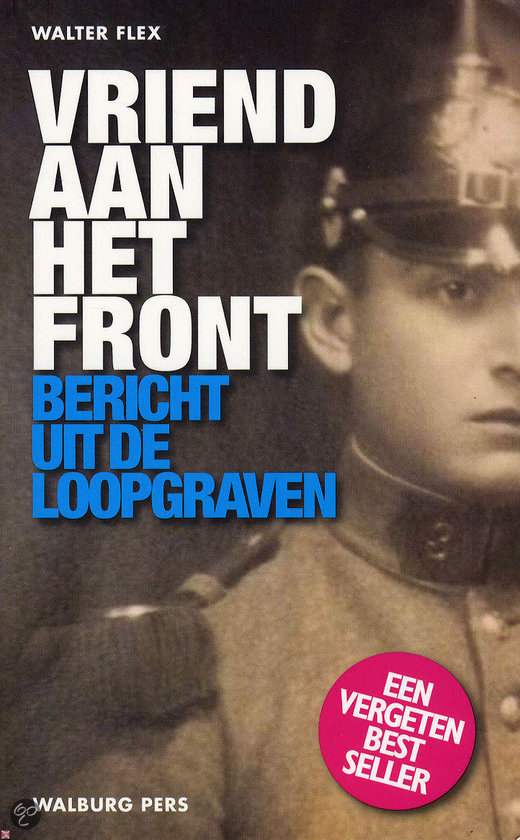
Walter Flex, Vriend aan het front - Bericht uit de loopgraven.
A translation of the 1916 original Der Wanderer Zwischen Beiden Welten.
Ammianus Marcellinus, Julianus, de laatste heidense keizer. Nadagen van een wereldrijk
Res Gestae, in de vertaling van Daan den Hengst. For Anglophones, that means that the Res Gestae by Ammianus Marcellinus have been translated into Dutch.
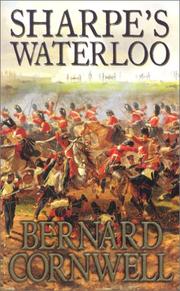
Bernard Cornwell - Sharpe's Waterloo
and another one I thought of myself. Not so much for historical input, but to get a view of how misinformed British readers can be about the battle
Walter Flex, Vriend aan het front - Bericht uit de loopgraven.
A translation of the 1916 original Der Wanderer Zwischen Beiden Welten.
Ammianus Marcellinus, Julianus, de laatste heidense keizer. Nadagen van een wereldrijk
Res Gestae, in de vertaling van Daan den Hengst. For Anglophones, that means that the Res Gestae by Ammianus Marcellinus have been translated into Dutch.
Bernard Cornwell - Sharpe's Waterloo
and another one I thought of myself. Not so much for historical input, but to get a view of how misinformed British readers can be about the battle
Friday, 17 May 2013
Struggle over the Legacy of Al-Andalus
The eight centuries of reluctant cohabitation by Christians, Jews and Muslims on the Iberian peninsula have acquired new relevance in an age of mass migration of Muslims into 'Christian' Western Europe. For some the level of harmony which was acquired can be taken as an indicator of our future ability to live together.
Luc Corly's De Spaanse conquista en reconquista 711-1492 tries to tackle this complex and tricky subject, in itself a brave thing. In my opinion, Corluy writes a pretty robust political and military history of the period, but falls short in providing lessons for the present and future.
Spain as excessive, as Corluy
claims. There were times of increased importance of religion as a legitimation
of warfare, under Al-Mansur and the Almoravids and Almohades. In the first case
religious fervour was a way to compensate for the lack of legitimacy of
Al-Mansur’s regime, and in the latter two cases it was inherent in the
movements. But likewise the Castilians had their linea dura shortly after the
capture of Toledo . The
religious absolutism on both sides was more a sign of the premodern world view than with inherent aspects of those religions.
Lessons for the future?
Finally, I think that it is difficult to draw too many lessons from the past for the present. The Islam of today is not the same as that of five centuries ago, just like Christianity has changed. Also, the Muslims of today have not come as a small, conquering elite, but as a mass of powerless and uneducated immigrants.
Western society has much greater influence on their values now than it had in the age of reconquista: education, work, mass media and systems of political representation are very powerful means of socialisation. Even though small miniorities of Muslims might reject western society, many more accept it in broad lines. Even many orthodox slowly come to accept western concepts of individual liberty.
The main argument of Islamophobes (as opposed to people critical of current manifestations of Islam, for which there is ground enough) is that Islam is in some way unchanged and unchangeably aggressive and intolerant of other religions. The history of Islam shows that there is such a diversity of experiences there that
belies that argument. Just as the Crusades, inquisition, pogroms, savage wars of religion are matched by charity, lay devotion, truce of god etc. And that is even before Christianity is transformed (I'd almost say domesticated) by humanism and enlightenment and subjected to higher standards of humanity as it is today..
On the one hand mass immigration of Muslims into Western Europe is a thrilling opportunity to set an example of how different religions can live peacefully together, without one being subjected to the other. On the other hand, it could still go wrong. But the first step to success is to admit that Islam is able to change (like any other monotheist religion).
I hope this incites some of you to comment!
Appendix:On the social make up of conquista Spain
There was a considerable Jewish population in both Christian and Muslim territories. They could occassionally rise to important positions in Muslim administrations, but tended to remain marginalised in Christian states. Their lives seem to have been better generally in Muslim territories under the dhimmi system than in Christian areas.
Luc Corly's De Spaanse conquista en reconquista 711-1492 tries to tackle this complex and tricky subject, in itself a brave thing. In my opinion, Corluy writes a pretty robust political and military history of the period, but falls short in providing lessons for the present and future.
One of the
advantages of going to Antwerp in January was visiting a Belgian bookstore, which is different from
going to a Dutch one, not least in the availability of books by Belgians (cultural imperialism means you find lots of Dutch books in Belgium but fewer Belgian books in the Netherlands). This book was advertised as the first account of the Muslim
presence in Spain in the
Dutch language and I bought this book in the knowledge that I would be visiting
Andalusia in May.
Corluy
describes the general political and military history of the peninsula, despite
his insistence in the introduction that he wants to offer a broader picture.
I’d say that over three quarters of his book still focus on this narrow topic. There
is some explanation of the social order, and there are interesting side stories
on the Celtic church and monastic orders. But there is no sense of the economic
history, only a hint on the demographic trends and very little on how
Christians, Jews and Muslims actually lived together or even apart.
Personally,
I love military history and I easily waded through war upon war upon invasion
upon revolt. It’s given me one brilliant setting for a megagame (the fall of Toledo and the Almoravid
invasion around 1085. Yes, this is also the period of El Cid) and provided a
nice background to my visits to Ronda and Malaga .
But the lack of social and economic context provides a problem for the
conclusions he draws in the final two chapters.
![]() |
| Okay, I bought one book in Spain, a historical atlas. This is the situation in 1086 |
Corluy
shows convincingly that the cohabitation of the three religions in Spain was no
multicultural paradise. Whether the Christians or Muslims were in charge, the
minorities were always treated a second or third rate people (see appendix). The quick
expulsion of Muslims and Jews after 1492 shows that how fragile even that
tolerance was.
But at
least during the 800 years before that, forced conversion or expulsion were the
exception, not the rule. And if there wasn’t a harmonious convivencia, at least Christian and Muslim leaders co-operated
against their co-religionists when it suited them politically. Also, when
Christian and Muslim leaders felt it was useful (and they weren’t restricted by
more fanatical co-religionists) they allowed greater freedoms to their
minorities.
The Jews
were obviously better off under Muslim rule. Biblically inspired anti-Semitism
reappeared every once in a while in the Christian territories and especially in
the 14th and 15th centuries. But Jews were in a sense indispensible
as intermediaries between rulers and other minorities.
Regrettably,
there is no comparison to the rest of ‘Christendom’ or ‘Islam’. Was life for
religious minorities any better there than in Spain ? Did the French treat the
Albigensian heretics better than the Muslims were treated in Christian Spain?
Was the dhimmi system in Spain
tougher or more tolerable than in the Balkans or North
Africa ?
Surprisingly, for a
supposedly scholarly work there is no source material included and no reference
to literature in Arabic. This weakness is most evident in the last chapter, which
is meant to wrap up the discussion about the possibility for Christians, Jews
and Muslims to live together harmoniously.
Although I
don´t dispute the quotes showing Muslim arrogance and sense of superiority
(Christian mostly had the same attitude towards the Muslims), it is more than
worrying that his main source is Bernard Lewis, without any opposing voice.
Likewise, can the discussion between Spanish scholars on the islamic influence
on Spanish culture be seen without any reference to the ultra/catholic
tendencies of the Franco regime?
I fail to
see the lust for plunder of the Muslims in Lessons for the future?
Western society has much greater influence on their values now than it had in the age of reconquista: education, work, mass media and systems of political representation are very powerful means of socialisation. Even though small miniorities of Muslims might reject western society, many more accept it in broad lines. Even many orthodox slowly come to accept western concepts of individual liberty.
The main argument of Islamophobes (as opposed to people critical of current manifestations of Islam, for which there is ground enough) is that Islam is in some way unchanged and unchangeably aggressive and intolerant of other religions. The history of Islam shows that there is such a diversity of experiences there that
belies that argument. Just as the Crusades, inquisition, pogroms, savage wars of religion are matched by charity, lay devotion, truce of god etc. And that is even before Christianity is transformed (I'd almost say domesticated) by humanism and enlightenment and subjected to higher standards of humanity as it is today..
On the one hand mass immigration of Muslims into Western Europe is a thrilling opportunity to set an example of how different religions can live peacefully together, without one being subjected to the other. On the other hand, it could still go wrong. But the first step to success is to admit that Islam is able to change (like any other monotheist religion).
I hope this incites some of you to comment!
Appendix:On the social make up of conquista Spain
It is
helpful to have an idea of the main groups in the population of Spain at this
time, because there's more to it than just three religious groups. The small ruling class in Muslim Spain descended from the Syrian and Arab
invaders of the early 8th century. The North African Berbers had
also played an important role in the conquest of Spain but had been forcibly kept from
political power by the Arabs. They formed a group separate from the other Muslims and
Christians.
There was a considerable Jewish population in both Christian and Muslim territories. They could occassionally rise to important positions in Muslim administrations, but tended to remain marginalised in Christian states. Their lives seem to have been better generally in Muslim territories under the dhimmi system than in Christian areas.
The mass of
Christian population worked the land in a servile state (which originated in
the Roman/Visigoth age) with a small urban proletariat. In Muslim territories they retained the right to worship in their own way, but they were required to pay higher taxes under the dhimmi system and their rights were easily infringed upon when it seemed opportune. In the Christian territories at least they had more freedom to worship (within the restrictions of the church!) and a lower tax burden.
There must have been a Christian middle class of some sort, even tough small.
Below them was the class slaves. In Muslim territories these were Christians and heathen, often captured from the Christian territories in the North or brought from Africa. In the Christian territories the slaves were captured Muslims.
Thursday, 16 May 2013
New Boardgames Loot and Old Boardgames Loot
So last Saturday I bought a few games at the convention, a good way to support it (traders need to make trades to return). A good thing was that the prics were relatively low compared to the FLGS.
The new games are Risk: Legacy , Mice & Mystics, City of Remnants and Beyond Waterloo. The first is a birthday present for a great lover of Risk. I think he will enjoy having a special personalised copy of his own. M&M and CoR are both by Plaid Hat Games and have gotten very favourable reviews. It's a small company I like to see successful. The last one explores all the counterfactuals of the 1815 campaign on the battlefield, economically and diplomatically. I just needed to buy it and try it.
Me buying a couple of new games felt like a good point to evaluate where I'm standing on the Essen 2012 front. I guess a sudden twang of guilt. But it's also the half way point.
So let's see what I bought at Essen and what I've played so far:
Slavika: played at Murphy's Heroes (aka The Club)
Camp Roskilde: not played since Essen
Kolejka: played a few weeks ago. Fun. Should write a first impression
Gauntlet of Fools: played a few times with the kids but not with grown ups so I haven't tested the real fun part of the rules. Should write a first impression
King of Tokyo: Played a few times
Signum Mortis: not complete yet but should be soon. One for the summer then.
Expansion for Lupin the 3rd: not played yet. Should kick myself
So I should prepare a session of games like Slavika, Gauntlet, King of Tokyo and Camp Roskilde. They're fast, easy and fun. I have plans to play Kolejka again with the family. And Lupin really needs to get played!
The new games are Risk: Legacy , Mice & Mystics, City of Remnants and Beyond Waterloo. The first is a birthday present for a great lover of Risk. I think he will enjoy having a special personalised copy of his own. M&M and CoR are both by Plaid Hat Games and have gotten very favourable reviews. It's a small company I like to see successful. The last one explores all the counterfactuals of the 1815 campaign on the battlefield, economically and diplomatically. I just needed to buy it and try it.
Me buying a couple of new games felt like a good point to evaluate where I'm standing on the Essen 2012 front. I guess a sudden twang of guilt. But it's also the half way point.
So let's see what I bought at Essen and what I've played so far:
Slavika: played at Murphy's Heroes (aka The Club)
Camp Roskilde: not played since Essen
Kolejka: played a few weeks ago. Fun. Should write a first impression
Gauntlet of Fools: played a few times with the kids but not with grown ups so I haven't tested the real fun part of the rules. Should write a first impression
King of Tokyo: Played a few times
Signum Mortis: not complete yet but should be soon. One for the summer then.
Expansion for Lupin the 3rd: not played yet. Should kick myself
So I should prepare a session of games like Slavika, Gauntlet, King of Tokyo and Camp Roskilde. They're fast, easy and fun. I have plans to play Kolejka again with the family. And Lupin really needs to get played!
Wednesday, 15 May 2013
Gift of the Luftwaffe
This is what great buddies will do for you: pick up a great book for you in a second hand book shop in london!
filled to the brim with statistics on losses, production air crew etc. Awesome! Thanks mike!
Tuesday, 14 May 2013
Some statistics for (war)gamers from the Guardian
There's a lot of interesting stuff out there that doesn't end up in wargames blogs. I'd like to draw your attention to the Guardian's Datablog which does daily updates on all kinds of subjects as long as they can hang a database on it. The Guardian is one of the leading newsmedia in the use and visualisation of statistics, so worth your visit in any case. But they occasionally pick up war and wargame related stuff that I link through to here for your benefit:
Some of the benefits of the Guardian approach is that the datasets are available for everyone and documented. This makes them much more accessible and transparent than the official sources and so easier to use for the public.
![]() |
| You might have guessed that this image was from the Guardian |
- A dozen maps and infographics from the Guardian during WWI: shipping losses and submarine sinkings, battlefields and recruiting
- Stats on Civilian casualties in Afghanistan compared to other conflicts
- Terror attacks in the US in the past 40 years: including date, location, groups responsible and target
- Country contributions to UN peacekeeping missions: including their deployment
- All mentions of characters in A Game of Thrones, listing relations, major events and killings
- Global Database on Events, Location and Tone, to collect all historical events. At present dating back to 1979, but will be expanded backwards in due course: "over 250m events in over 300 categories from riots and protests to diplomatic exchanges and peace appeals".
Some of the benefits of the Guardian approach is that the datasets are available for everyone and documented. This makes them much more accessible and transparent than the official sources and so easier to use for the public.
Monday, 13 May 2013
Playtests for megagame Master of Europe on May 18th and 19th
Calling you all to join in the playtest of megagame Master of Europe.
In the weekend of Easter/Whitsunday (Pinksteren), Jim Wallman will be in the Netherlands to test the new combat system. These playtests will be organised with gaming club Murphy's Heroes in Delftstede (Phoenixstraat 66 Delft), on the 18th of May, 12.00-17.00, and with gaming club Casus Belli in Cafe de Verdieping (Platenmakerstraat 3 Nijmegen), on the 19th of May from 14.00-18.00.
The playtest will cover the operational part of the game, the movement and combat of troops on the map. For those of you participating in the game on June 22nd, this may be a good way to get a feel for the system. For those of you unable to join in on the 22nd this may be a good opportunity to get an impression of what it will be like!
Please notify Marc Seutter by mail at marcs@cs.ru.nl if you plan to join in (also for questions)
I also want to urge those of you who plan to come to the megagame on June 22 but haven't registered yet, to do so RIGHT NOW! We will be doint the casting not long after the playtest, and after that your chances at your favourite spot are much lower.
The game will take place Saturday 22nd of June at Activiteitencentrum Doddendaal in Nijmegen, The Netherlands. This is the same place as last year’s Barbarossa game.
Costs to participate in the game are 25€ for players and 12,50€ for umpires. You can enlist individually or as a group. You can register by following this link:
In the weekend of Easter/Whitsunday (Pinksteren), Jim Wallman will be in the Netherlands to test the new combat system. These playtests will be organised with gaming club Murphy's Heroes in Delftstede (Phoenixstraat 66 Delft), on the 18th of May, 12.00-17.00, and with gaming club Casus Belli in Cafe de Verdieping (Platenmakerstraat 3 Nijmegen), on the 19th of May from 14.00-18.00.
The playtest will cover the operational part of the game, the movement and combat of troops on the map. For those of you participating in the game on June 22nd, this may be a good way to get a feel for the system. For those of you unable to join in on the 22nd this may be a good opportunity to get an impression of what it will be like!
Please notify Marc Seutter by mail at marcs@cs.ru.nl if you plan to join in (also for questions)
I also want to urge those of you who plan to come to the megagame on June 22 but haven't registered yet, to do so RIGHT NOW! We will be doint the casting not long after the playtest, and after that your chances at your favourite spot are much lower.
The game will take place Saturday 22nd of June at Activiteitencentrum Doddendaal in Nijmegen, The Netherlands. This is the same place as last year’s Barbarossa game.
Costs to participate in the game are 25€ for players and 12,50€ for umpires. You can enlist individually or as a group. You can register by following this link:
Sunday, 12 May 2013
Herr Dr Jonez, I prezjume? A great participation game
Went to the Ducosim convention on Saturday. Mainly to pick up a few boardgames I was looking forward to (one of them a present). I felt that was the best way to support the club now that they seem to be in a bit of trouble.
I got to join in Jan-Willem van der Pijl's excellent Indiana Jones and the Raiders of the Lost Ark participation game. The game was simple enough to be picked up in 5 minutes, there was enough action to keep your attention and enough chaos to prevent the game bogging down. The teams were assymetric (dr Jones and sidekick, Nazis, Wu Manchu clan, Corto Maltese, rocketeers) with good differentiation between expendable minor characters and your stars. A simple stats chart kept it all together.
There's movement, long range fire and close combat stats, but more important are the stunt stats (crucial for jumping from one speeding truck to another, but also for dodging bullets, cars and fists). In case you were doing something really dangerous (eg jumping from one speeding truck to another) a cojones test was required. I also liked the 'oneliner' ability which allows main characters to bluff their way through.
Jan-Willem kept it all together, maintaining the pace and firmly but politely deflecting distractions from the players. He rewarded creativity and guts and kept weak players engaged.
Of course the action hero movie type of game allows for memorable actions and grotesque events, and it is surprising how quickly you warm even to bad guys like general Stahlhelm. Before you know it it's International-Talk-Wiz-A-Fake-Zjerman-Akzent-Day.
The miniatures, accessories and terrain were an eclectic mix from different manufacturers, handicraft and Queens Day free market shopping. I'd say maximum effect with relatively limited effort. Hats off!
![]() |
| Three teams racing to catch the Lost Ark of the Convenant |
![]() |
| My team, led by General Stahlhelm, dr Kriepstein and herr Flick |
There's movement, long range fire and close combat stats, but more important are the stunt stats (crucial for jumping from one speeding truck to another, but also for dodging bullets, cars and fists). In case you were doing something really dangerous (eg jumping from one speeding truck to another) a cojones test was required. I also liked the 'oneliner' ability which allows main characters to bluff their way through.
Jan-Willem kept it all together, maintaining the pace and firmly but politely deflecting distractions from the players. He rewarded creativity and guts and kept weak players engaged.
![]() |
| Team Stahlhelm's final but unsuccessful attempt to wrest the Ark from their competitors |
![]() |
| The game terrain: providing an arena, some props and little cover |
The miniatures, accessories and terrain were an eclectic mix from different manufacturers, handicraft and Queens Day free market shopping. I'd say maximum effect with relatively limited effort. Hats off!
Friday, 10 May 2013
Making a miracle happen
Nice booklet
based on annual lecture commemorating the lifting of the siege of Leiden in 1574. The
lecture is always connected to the siege, and in this case on the logistical
side. De Heijer shows that the flooding of the Holland countryside and the relief expedition
were a pretty desperate gamble and required frantic improvisation.
Henk den Heijer, Holland onder water. De logistiek achter het ontzet van Leiden (Leiden 2010).
There had
been some experience with inundation of the low lying parts of Holland
in defence against the Spanish attacks, such as at Alkmaar the previous year. However, there was
no guarantee that the water would rise high enough to make an impact on the
besieging Spanish troops. It was also highly uncertain that the Dutch rebels
would be able to break through to the city. And from a logistical perspective,
everything had to be started from scratch in a few weeks. Finally, unexpected events
caused delays and necessitated further efforts to supply the troops. A Spanish
attack on Dordrecht
diverted resources.
Den Heijer
shows the complex and extensive character of the preparations. Numerous dikes
had to be breached, for which hundreds of pioneers had to be recruited from the
surrounding towns and countryside. In one case it was necessary to occupy a
Spanish held dike before the pioneers could get to work. Also, the countryside
needed to be evacuated.
At the same
time the fleet was collected. This probably amounted to about 70 warships and
250 supporting vessels. Because of the low water levels in the flooded area,
these could only be flat bottomed ships and many were improvised from grain and
peat transports. There were also probably up to another hundreds transports
needed to supply the fleet over the course of the campaign.
The ships were
fitted with a motley collection of guns, mostly light and flexible. A few
heavier pieces were included but these were highly impractical and ineffective.
The whole expedition consisted of about 3000 soldiers, 3000 men to man the
ships and 1000 pioneers. In contemporary terms, this was a major effort.
Labels:
amphibious,
books,
history,
Renaissance
Subscribe to:
Posts (Atom)