Tuesday, 28 January 2014

A Night of Short and Fun

Last Friday’s gaming session I had the opportunity to play three of the games on my list of to do’s for 2014. So that’s off to a good start! We were with four, which broadened the range of games we could play.

The kind of hand that will get you into trouble

First up was Love Letters. The theme may be a bit pedestrian (conquer the heart of the princess) but there is a lot of play in a game with only 16 cards. It’s all driven by the interaction between the cards, each with its own special effect. This also means that luck, but also deduction plays an important role (who hold which card?). With almost all of us in a position to win, this was a close fought and exciting start.

Next was Concept which I had picked up in Essen. At first sight this is a classic party game (guess a famous person/movie/object) but there’s more to it. The aim of the game is to describe an object through a number of basic concepts plus, colour, form, or whatever makes it stand out. Your opponents need to guess what it is, with points to the first correct answer. We also set a time limit of 2 minutes. It turned out that the quest for Jack Bauer (of 24 fame) got stuck on the name of the actor who plays him (Kiefer Sutherland) because I couldn’t get them to shift to the character. On the other hand ‘dinosaur’ was guessed in a wink. 

I think this one will reappear at some point because there is fun in developing a common set of shortcuts to more complicated concepts (ie a language). There are also good opportunities to integrate this idea in other games (where players are alien races).

My neighbour taking the flak

Finally Mag Blast, a lighthearted card game in which space race have to ground each other to dust. Game play and mechanisms remind me mostly of Enemy in Sight or (Modern) Naval War. For example, you need gun turrets in the right colour to play a blast card. There is a luck factor (hiding in an asteroid belt during most of the game helps) but its primarily good fun with limited complexity. I could get people to play this again.

Anyway, a good thing to play a few shorter games in an evening once in a while.


PS I also played a bit of Lego Creationary with the family last week, so that´s a good number of games by any means.

Thursday, 16 January 2014

A Bold and Ambitious Enterprise by Andrew Bamford

In December 1813 the British cabinet decided to create a force to operate in the Low Countries to assure that the area came under friendly rule, for which a suitable dynasty was quickly found in the House of Orange. Task of the force was to ensure the security of the new regime, then the expansion of that regime in to present day Belgium and the destruction of the French fleet in Antwerp if not the capture of the town. This book relates the story of that ‘bold and ambitious enterprise’.


I found the book interesting for three reasons:

A Bold and Ambitious Enterprise tells the story of a significant part of the army that would fight Napoleon at Quatre Bras and Waterloo a year later. It was led by the aged but capable general Graham, who had served with Wellington in the Peninsula. Its origins were not very fateful, cobbled together from units recovering and rebuilding from service elsewhere. Many of the men were only partially trained or otherwise unfit for service. It took time to gather enough strength to take aggressive action, but in reality was unable to do so without support from allied troops.

Although the troops performed as well as might be expected in two small scale attacks against the defences of Antwerp, the force failed its toughest test: the storming of Bergen op Zoom. This weak and isolated French garrison was a thorn in the flesh of the allies, occupying troops that Graham wished to employ against his main objective. The failure of the attack resulted mostly from insufficient troops employed and failure of leadership by senior commanders. Some went off on their own, thus leaving troops leaderless, other showed a lack of initiative. It all ended in half of the forces killed, wounded or captured. All this bodes ill for the performance a year later.

De Gevangenpoort or Prisoners Gate between the town centre and harbour
A British section held out here until forced away in the morning

The book also provides a counterpoint to the better known developments in France. Although this is just a sideshow, it shows the ways in which the area might have been more important had Napoleon successfully held off the Schlesische Armee and the Hauptarmee. It is interesting to see how the course of the war in France progressively allows or demands more troops to be shifted south.

Finally, it has more consideration for the position of Britain´s allies, ie the Dutch and Prussians, than most British authors. This prevents the book from the all too familiar blame game. Although Graham kept trying to get his allies to cooperate in a move against Antwerp (his main objective), it was understandable that their efforts were limited by overriding considerations elsewhere. The book also shows that quite a few people in prominent places during the Waterloo campaign had already acquainted themselves with their allies and struck up a workable relationship (eg Cooke, Bülow and Van Gorkum). That would prove useful.

The book is well written and makes good use of personal accounts. Although I didn’t care much for the details of British involvement, it was nice to read about the attack on Bergen op Zoom, having visited the town in September. Too bad not much of the fortress has remained.

Tuesday, 14 January 2014

Review: French Guardsman vs Russian Jaeger: 1812-14


French Guardsman vs Russian Jaeger: 1812-14
French Guardsman vs Russian Jaeger: 1812-14 by Laurence Spring

My rating: 3 of 5 stars


I’m not decided about this new Osprey Combat series yet. Not surprisingly, this series feels a lot like the Duel series where tanks, combat planes and ships are compared. The results there are mixed, and I’m less a hardware man than a tactics man, so I have only bought one or two of those.

It’s a good thing that Osprey’s taking a few lesser known Napoleonic actions and focussing more on the tactics, but the series is hampered by combining tidbits you’d expect in Warrior series (recruiting, equipment), Essential History (Background), Campaign (Into Combat) and Elite (tactics). In this case it meant that it took a long time before you got to the actual battles.

Author Laurence Spring has a good knowledge of the period and, most importantly, first hand accounts of the battles (although those on Leipzig are very limited, but I guess they needed to include one big battle) which add spice to the narrative. In fact the account of the Young Guard Voltigeurs’ destruction ay Krasnyi had me holding my breath. But this is what I would have wanted more of, and less historical introduction.

Also, the choice of Russian Jaeger and French Young Guard is not the most obvious, because they are not wholly different troop types. In fact, as Spring shows, they both could use light infantry tactics and operate in close formation.

This doesn’t mean that the idea behind the series can’t work. But there have to be significant differences in tactics or equipment between the two sides to make it work. I can see how Zulu Warrior vs British infantryman could work, or Greek hoplite vs Roman legionary or in even terms of Napoleonics: Cuirassier vs infantry (I would actually love to see an Osprey book about horse artillery in action). But the present choices seem too similar.

So my gripes so far with this series is not that I don’t like the idea, but that they make the wrong choices of adversaries and what to focus on. The choice for small and lesser known actions combined with tactics and first hand accounts has my blessing. I’ll catch another one from the series later, but don’t hold my hopes too high.


View all my reviews

Monday, 13 January 2014

Another step in 3D printing of miniatures

A month or two ago I wrote about the 3D revolution coming to wargames miniatures. It's moving on faster than I thought. See this Hero Forge Kickstarter with customisable 3D miniatures.

From the Hero Forge page on Kickstarter
From a marketing point of view it hits a good spot: getting exactly the miniature you want means you are willing to pay more per piece. It even gives an option for the quality of the miniatures. Not sure that it's going to be a huge success right now, because the sculpting is good but not great and the prices is still high, but it certainly shows the possibilities.

From the Hero Forge page on Kickstarter

But this also made me realise that it provides and instant marketing tool for the entertainment industry. How long before online video games make the link: 3D printing your avatar? EDIT: this is already happening in World of Warcraft.


And another step is of course to make it possible for people to print those customisable miniatures at home.

Saturday, 11 January 2014

Eldritch Horror

Played Eldritch Horror again last night and it was a good session. I think in our first game we brought some misconceptions with us from our play of Arkham Horror. This is not surprising as there are many elements in both games that sound alike but have different practical execution, like monsters and clue tokens.


In our first game we took on Yog Sothoth. Our problem was that we focused too much on monsters, who are not as aggressive and dominant as in AH, while it left us stranded on unclosed gates for which we were then punished on the doom track. We also underestimated the negative effects of rumours, so we waited to long resolving them, which hampered our the main mission, ie getting the clue tokens on the mysteries. The result was a rather dismal three hour defeat with no mystery solved.

The second game yesterday against Azatoth went much better. Better cooperation and specialisation, fewer unnecessary steps on the doom track for open gates and more focus on solving rumours quickly. Especially the sugar daddy and clue generating and dispensing specialisations proved beneficial as they ensured that players were equipped with enough gear and clues to take on the serious monsters and then close gates.

It still was a close run game which ended with the doom track on two (thanks to an added step that delayed it) and a few turns in hand. There were some ways in which that could have gone worse.

My first character in the 2nd game, just before he was
devoured to fulfill another player's Dark Pact
We were quite cavalier with taking on Dark Pacts. That served us rather well in general (although two investigators were devoured).

It has been said in several places that EH is AH without the convoluted bits and so plays smoother and faster, but I'm not convinced yet of either claim. We played 4 and a half hours with six players, which is not better than AH, and there was a period in the game where it felt gamey, and our energy levels fell and interest in the game sagged.

But it is a fine game. Good cooperation is rewarded and it still captures the mood of Lovecraftian horror.

Monday, 6 January 2014

Reading priorities for January

There's a bunch of books I hope to be reading this month in five groups:

 
  • The biographies of Willem I and Willem II regarding their activities up to 1815
  • 1814 Campaign. For lessons to Napoleon and general strategical dilemma of defense of France, as well as performance of French and allied armies. Already did Uffindel, next Leggiere's Fall of Napoleon, Petre's Napoleon at Bay and Bamford's Bold and Ambitious Enterprise
  • Dutch Army 1780-1815. Showing experience, organisation, mobilisation post 1813 etc. Whole bunch of books & articles
  • Dutch economy 1780-1815: De Vries & Van der Woude, as well as Van Zanden & Van Riel
  • Economics and mobilisation of other main powers. Bunch of books, but hardly complete.


Sunday, 5 January 2014

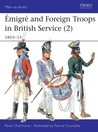
Review: Emigre and Foreign Troops in British Service (2) 1803-15


Emigre and Foreign Troops in British Service (2) 1803-15
Emigre and Foreign Troops in British Service (2) 1803-15 by René Chartrand

My rating: 2 of 5 stars


Second part of Chartrand’s overview of foreign units in British service. As in the revolutionary wars, the British used many foreign units to increase their army. The foreign element in the regular army increased from 17,000 (or about 11%) in early 1804 tot 54,000 (over a fifth) in late 1813.

There was a change in recruiting grounds, however. With access to the continent limited by extended French control and many French émigrées reconciled with the Napoleonic order, the Mediterranean now became a major source of manpower, with Spanish, Italians, Greeks, Albanians, Maltese, Minorcans enlisted. Outside Europe native troops were taken on extensively (in addition to native troops of the East India Company).

Of course, the King’s German Legion and Brunswick contingents still remained as ‘European’ foreigners (but these are treated in separate Osprey books). The 60th regiment also was mostly composed of Germans and other foreigners.

Like its sister book, this is rather an eclectic list of units and uniform details, lacking a overarching narrative, let alone analysis. Only for people with special interest in this subject.


View all my reviews

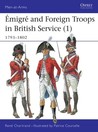
Review: Emigre and Foreign Troops in British Service (1) 1792-1803


Emigre and Foreign Troops in British Service (1) 1792-1803
Emigre and Foreign Troops in British Service (1) 1792-1803 by René Chartrand

My rating: 2 of 5 stars


First part of Chartrand’s overview of foreign units in British service. The 18th century tradition of employing troops from Switzerland and smaller German princedoms was continued and many French émigrées were recruited to fight the fledgling Republic. A number of similar units were taken over from Dutch service after the French overran Holland early 1795. Dutch and French colonial troops were also incorporated when overseas possessions were conquered by British expeditions.

Most of the units were employed in colonial warfare, especially the West Indies, where disease resulted in high rates of deaths. The reasons for employment overseas were probably to lower chances for desertion and to spare British troops from the bad conditions.

Like its sister book, this is rather an eclectic list of units and uniform details, lacking a overarching narrative, let alone analysis. Only for people with special interest in this subject.


View all my reviews

Saturday, 4 January 2014

Review: Napoleon 1814: The Defence of France


Napoleon 1814: The Defence of France
Napoleon 1814: The Defence of France by Andrew Uffindell

My rating: 5 of 5 stars


Excellent book: well written, well researched and adds in meaningful ways to other accounts.

Uffindel's main point is that we can't understand the actions and outcome of the campaign of France in 1814 if we look at the military in isolation from the physical, political and social conditions in which it took place. That means his account provides less detail on the battles, but offers a wider scope than traditional military

He starts out with several chapters describing the French and allied armies at the start of 1814, the state of France and the campaign area. In the second part we get an operational overview of the campaign (not much detail on the battles). Next, Uffindel analyses the campaign and the most important strategic decisions. The last part provides and overview of the experience of civilians, POWs and the sick and wounded.

Terrain and weather determined operational and tactical movement, but also led to high levels of straggling and disease. The area in which the campaign was fought was very small and could not support the armies operating in it. The allies faced the dilemma of concentrating for battle or spreading out to ease logistics. The weather was exceptionally cold, even for the time of year.

But the most important decision of the campaign was the allies crossing the Rhine in December, thus denying the resources and men of North-Eastern France to Napoleon, diminishing the credibility of his regime by showing its inability to defend the country and by putting Paris in danger, thus constraining the Emperor to the defence of his capital.

For Uffindel, time was running out for Napoleon. If he had managed to pull off a decisive victory early in the campaign, he could have re-established his credibility and gained the time and space to rebuild his army from conscripts. Many of the steps he took in late 1813, like the silencing of internal opposition and overconfident expressions in the press, gave him only a temporary respite with negative long term repercussions.

The most interesting part of the book is the last. It draws its strength from research in local archives, combined with first hand accounts from soldiers and civilians. It shows the effects of the occupation on communities and the administration (and provides a counterpoint to the French behaviour in foreign territory): provision of food and lodgings to allied soldiers, rape and plunder, collaboration and resistance, the movement of refugees and POWs, the care of sick and wounded.

It also shows the reasoning behind and the limits to Napoleon’s decision not to wage popular warfare. The occupation of north eastern France helped rally that part of the country to him as allied occupation broke the apathy of the population. But militia troops like the Garde National were of questionably quality (especially its leadership) and competed for manpower with the regular army, so they were only levied locally. Popular warfare was only possible if the population still believed in victory and guerilla’s could be supported by field armies. But sending out field armies was not a possibility with Paris under threat and by the time Napoleon made the move in late March, it was already too late.

In many places, the book provides pointers to 1815. It explains why a defensive, attritional strategy was not really and option for Napoleon. He couldn’t count on popular support to hold out, and he couldn’t afford to have foreign armies wage war at his expense on French soil.

And from my reading, the success of French aggressive cavalry tactics in 1814 may have given Napoleon and his senior commanders too much confidence in its application at Waterloo.

Of course, there were also important differences: in 1815 the alliance was much closer knit because many outstanding issues had been solved and Napoleon was no longer a realistic option. The monarchs were also not present, intervening in the direction of the campaign and battles. It made life easier for the generals. The military resources of the Low Countries and Germany were now fully available, shifting the balance further in their favour.

Napoleon also held some advantages. There was an intact army waiting for him and he had more time and space to build up his army and now had the choice where to fight. Popular support may even have been stronger for him in 1815 than in 1814, exactly because the French had experienced occupation the year before. On the other hand, he had lost the full backing of the political and military elite and they now had a legitimate alternative.


View all my reviews

Which 12 games for 2014?


Okay, if I want to play 12 of my games in this coming year, I had better prepare a shortlist. I will give you a choice from my most recent acquisitions in 2012 and 2013: 


From Essen

Concept
Sigismundus Augustus

(I already played Strajk at the Christmas Offensive 2013, and Rats in the Walls at Essen)

Signum Mortis (Essen 2012)


From Secret Satan

The World Cup Card Game
Ascalion (aka Borderlands, got in 2012)
Mission Red Planet (got in 2012)

Collision
Mag Blast
Scarab Lords
Isle of dr Necreaux
Red November
Lord of the Rings card game (not the CCG)

(I already played Pass the Pigs on New Year’s Eve with the kids. Success.)

Other acquisitions

Warriors & Traders
Mice & Mystics
City of Remnants
Love Letters
Pathfinder card game

and some games on Waterloo or Napoleonic wars

Beyond Waterloo
1815: The Waterloo Campaign
Dresden 20
Napoleonic Wars (GMT)
Wellington (GMT)

Most of these are light games, but others require serious study, so they might not make it in the end.

Which one do you guys think I should try first?