 |
| Cover of the Prikkeldraad book |
The Prikkeldaad documentary was based around a book with the same name, published shortly after the war. It held the reminiscences, water colours, songs, sometimes photographs, of many men that had gone gone through one of the main Dutch POW camps, between Berlin and Magdeburg.
My granddad claimed to have contributed some photographs to the book, but he lost all his stuff on his trip back. As far as I understand he spent time in the Ukraine and was liberated by the Soviets somewhere in Bohemia. He then made his way back home through Saxony. After the war he never bought the book, but much later I found a copy and gave it to him.
There were interesting differences and similarities between the documentaries. Both concerned WWII and featured interviews with survivors, men in their 90s. The image they paint of war is not a rosy picture and sometimes very emotional. Only few of them didn't show emotion at some point. Guilt, anger, relief, pride, joy and loss were all there, even though many of them tried to remain calm and dignified most of the time. However, seeing people killed around you and looking death in the eye affects you.
There were differences as well. While the British soldier talked mostly about combat, the Dutch POWs were always talking about food. The food they loved most and the food they needed to get and the ways to get it. Some entered the black market, many stole. From the Germans, but also their comrades.
But the most marked difference is probably that between victors and vanquished. While the British tankies may have lost battles or at some point admitted they felt that they'd done their bit, overall they looked on that period with pride and satisfaction. One even remarked that some of the happiest moments of his life were in the war, being young and having large amounts of time where you had nothing else to think about.
On the other hand all the Dutchmen felt a need to justify their decision to move back into German custody as POWs in 1943, to work in the Nazi war industry. Why didn't they try to elope and hide, as some were able to do? Given that hiding 10,000s of men would have been impossible in a small, urbanised country like the Netherlands, I can't really blame them. They were also made to understand, implicitely, that their absconding would be taken out on their families.
I understand a bit how hard that decision must have been on time because my grandfather had been a soldier in 1940 too, and he went to Germany when called up. I know he felt he needed to justify that decision. He bore that decision with a sense of shame.
 |
| A water colour made by Bob Entrop, author of the book and grandfather of the guy who made the documentary |
But let's not make light of the plight of the Dutch POWs. Even if they weren't imprisoned as long as the Poles or the French, and not nearly treated as bad as the Russians, only a third of them came back. Hunger and illness weakened and killed, but so did hard and sometimes very dangerous labour. Dangerous labour means recovering unexploded bombs in German towns and working in strategic facilities that were bombed themselves.
My granddad told a story of two comrades who refused to leave their barracks during a raid and got killed. In another instance, the Germans guards that had denied the POWs access to their shelter had been drowned and cooked in petrol. My grandmother added that he used to have nightmares long after the war.
But the experience of losing a war and becoming a POW seems rob you of a sense of pride and accomplishment. Strangely enough, little attention was paid by Urban to the two guys that were taken POW during the war, because their story might have been much more like that of the Dutch.
The democratisation of the memory of war
But what these documentaries told me is the incredible change we´ve seen in the ´writing´ of history since that war. The initial version of the war was based on the wartime propaganda, which was then filled in with official histories and the books by leading generals which appeared in the 1950s the 1960s.
But then the cracks appeared in the story, with a new generation of historians lancing the boils of controversy that had been hidden from public view until then. And after that we saw the first books by and interviews with the ´ordinary´ men involved. This was partly driven by a wish among some historians to write the history of common people, and so of the rank and file of the armies. And when these memories started disappearing as veterans started retiring and dying of old age, there developed a need to preserve their stories for later generations.
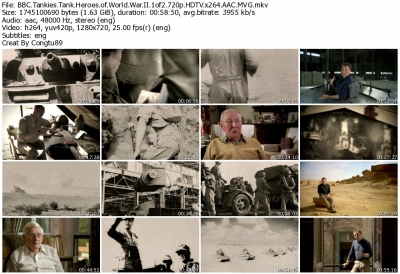 |
| Stills from Tankies |
Later the historical record became more nuanced, and more room appeared for grey areas, like the killing of POWs (see for example Saving Private Ryan). This also mirrored a change in military history writing that focussed on the experience of battle of the rank and file, and from there on spread to tactics, doctrine and leadership as opposed to the (grand) strategic questions which seemed settled by the debates of the 1960s and 1970s.
But this also involved the black sheep, for example in the Netherlands men who had joined the Waffen SS were interviewed a book by Armando in 1967. It was shocking then to many people on principle of giving these bad people a voice at all. Since then more books and documentaries have appeared, like this 2011 documentary with interviews with Dutch SS members.
The focus on people´s memories has its pitfalls, because our knowledge of memory has made us much more suspicious of the truth we can wrest from them. I remember a story my granddad told me of a major walking upright in the middle of the field during an attack on the Ypenburg airfield in May 1940. It matched a story I had read in a book on the fighting and I wonder whether my granddad had really seen this happening, or later included it on the basis of stories he'd heard or read.
And looking back years after the events will cloud the story in more ways. But that doesn´t mean that memories are useless. A good historian should at least try to corroborate the facts. And the memories themselves are valuable, the emotions and the justifications.
I sometimes wish we´d have that kind of memories for many more ´ordinary´ people in history. It might look something like this....
... Peter Watkins´ Culloden from 1964.


Thanks for a thoughtful and very personal post, I quite enjoyed it and am enjoying your blog more as I get to know it better.
ReplyDeleteWhen I was an undergraduate in the early 1980s the dominant historiography was in transition from great men to great ideas and forces (an example of the latter being Braudel's trilogy on the Mediterranean), but the histories of everyday life were there as well (eg, the Annales school in France) and while I was quite a snob at first, not wanting to read the histories of "women and slaves" as a colleague sniffily described them, I realized that they were where real history lived and breathed.
In WW2 history I first became aware of the recollections of old men when my dad let me stay up to watch "The World At War" series, but I gradually realized that these old men were the generals and officers of their day, for the most part. And yet millions of men, women, and children were involved in that war, and their experiences, their dissent, their attitudes (shirking, cowardice, reluctant or coerced obedience) are not usually reflected in the official histories of the 50s and 60s.
I believe there is still a place for the larger story and macro narrative - I just read Antony Beevor's book DDay, which follows the broad outline of the Normandy campaign, whereas Canadian historian Mark Zuelke's oral histories of Normandy leave me lost in the weeds and unable to grasp the big picture (though perhaps the big picture is someone's best (or biased)guess at the story.
AS for your grandfather, there is a whole different flavour of experience to be a young man on the winning side, and one trying to survive. My father, who spent three years training and raising a family in England with the Canadian Army, then went through Holland, always said he had an easy war. I am sure he glossed over a lot, but he never had to question his ideology, his pride, his masculinity, the way that the members of losing, interned, and captured armies did. Such a range of experience. You do well to remind us of these variations in lived history.
Thanks Michael, that is a great and much appreciated compliment to my blog. I guess my 'coming of age' in history was similar to yours. I moved from battles and generals, politicians and their schemes to the invisible hand of the economy and the historical materialism.
DeleteNone of these give the full picture. They might explain part of change, but without understanding human experience we have no idea of the decisions people make in day to day life. What did they know, where did they think it would all lead to? For them, and in the big picture?
Without the individual power of Napoleon or Roosevelt, how did masses of individual choices by powerless people shape the world? When did people stop fearing repression? When did they decide that repression was an alternative to chaos and insecurity?
Of course, all these approaches to history have value. BUt never in isolation. It's just that it is impossible to write history incorporating all these approaches evenly.
But what I think is most important is that 'the history of common people' has made history so popular. Oral history, but also genealogy have brought in so many amateur historians in. They are a huge market for professional writers, but are also already proving a useful auxiliary workforce for academics.
Who knows, maybe someday they'll wrest history from the hands of the professionals.
Only yesterday at CLWG was I discussing this transition of historiography. We had just replayed the German intervention to free Mussolini which included Skorzeny. The modern account of the battle included much of the incompetence, and sheer luck that led to Skorzeny's successful raid. As a boy I remember reading about his daring glider borne raid and it recounted as a tale of courage and great planning and execution.
ReplyDeleteI sometimes wonder if our move from Generals and drum and trumpet history to our focus on the ordinary chap and this episodic and almost accidental history is also like the move from grand vision of science to that of quantum randomness and sociological questioning of science itself.
I think the courage of many endeavors stands out much more when you realise how much chaos there was. Skorzeny went in, knowing it could all go badly wrong. But then, fortune on average favours the brave/foolish.
DeleteIt has led to a different kind of history, asking questions about mass behaviour. There's at least four general approaches that I know of: mass psychology, sociology, homo economicus and micro decisions to macro behaviour.
Only sociology describes process as emanating from the group, while the other three see it as processes emanating from individuals.
Military history has adapted the first to small group process, the group you eat with. But even then there are different factors: does the group cohesion make you do it, or does every individual derive his personal status from the group and thus make an individual choice to conform?
Very interesting and thought provoking blog post. I will certainly have to watch both documentaries now. Reading contemporary accounts from e.g. Afghanistan, the difference in perspective depending on e.g. command level is very noteworthy. And even then the accounting in tge western world is still rather one sided. I am looking forward to the perspective that future historians will grant on today's current events.
ReplyDeleteHi Derk,
DeleteThere will always be a difference between high and low ranking soldiers. Much of that difference is perspective and social class. The question is: how much has it changed over time?
Obviously a stone age warrior was much more personally involved in the lead up to a skirmish, and had a direct interest in the outcome.
But what when social distance grows in increasingly complex societies. And does the type of government matter? Did an Athenian citizen-falangist have a better idea of the direction of the campaign or battle than a squady at Goose Green?
What do you think?
Valid point. I'm not sure class is the big factor in the differences of accounts though. Bigger factors would seem to be the closeness to the actual action on the one side, and the ability to see the bigger picture on the other. In that respect I found "Company Commander" particularly interesting as it stitches those two worlds together to some extent.
ReplyDeleteThe stone age warrior in a skirmish is a somewhat misleading comparison, as the overall event is small enough to be perceived from the perspective from one person who is actually there.
But comparing the falangist and today's squaddy or one at Goose Green? Even with radios and everything, my impression is that what a squaddy will know about what is going outside his company or sometimes even his platoon will be fragmented and out-of-date by the time it gets to him. E.g. (if I recall correctly) the Irish troops, including their command, at Musah Qulah in 2006 received almost no information on what was going on outside their platoon house's direct environment for most of their stay there.
Just to add to my previous comments. the Musah Qulah case is, to my understanding, an extreme one and noteworthy for it. But it does serve to illustrate that even with modern communication means the perspective can still be surprisingly limited.
ReplyDeletePart of what happens in Afghanistan comes from the modern, 'empty' battlefield, part from the nature of low intensity warfare.
DeleteBut there's also a difference in that the citizen-soldier of the Greek city state, as a member of his community, also had a say in going to war and its prosecution. That may have given him more information on the big picture than his present day counterpart.
Then again, mercenaries (eg in the 17th or 18th century) had no clue and probably didn't care about the reasons for the war and how it was going.
Thanks again for the replies!
Delete