Showing posts with label Roman. Show all posts

Sunday, 20 November 2016

Israel Divided. Or Not?

Last weekend I was struck with a heavy bout of influenza which caused me to cancel a few appointments. It gave me some extra time to read and I decided to finish off Jona Lendering’s Israel Verdeeld (or Israel Divided).


The history of Israel and Jewish religion in the age of Jesus tickled memories of my past, growing up in the Dutch reformed church, while I follow Jona Lendering’s blog on ancient history and had enjoyed one of his previous books.

One of the first points to tackle is of course that Lendering assumes that Jesus actually did exist. Given that there are several independent, non-biblical sources that confirm his existence, I think that’s a fair point. But as Lendering argues, who he was and what he preached, is very hard to reconstruct because of the limits of the sources.

And this is where Lendering comes into his own as he explains how we can weigh the evidence, for example by rejecting facts that are only mentioned in one source, or which might have been added in later versions. Similar discussions pop up all over the book, whether discussing the actual theological differences between Jewish substreams or the power of priestly dynasties.

Israel in the time of Jesus

Politically the period was determined by the slow movement from the Seleucid to the Roman sphere of influence, until it became a Roman province during Jesus’ lifetime. At the same time, Jewish political and religious elites lost legitimacy as they got caught up in the power struggle and sometimes ended up on the losing side. Warfare also increased the tax pressure.

Lendering also describes how Jewish religion was divided over the interpretation of the halacha, the rules to live life. There were differences of opinion on such diverse topics as which texts were relevant (just the core books of the bible, or also the books of the prophets, and non-bible traditions?), on the relationship towards non-Jews, the afterlife and the limits to free will. There is ample proof of a lively debate that seems to have resonated deeply with those involved.

But the most important thing to take away is that fundamentally all Jews adhered to the sacrifice in the great temple of Jerusalem, and large parts of the halacha were devoted to the correct performance of the sacrifice.

A part that doesn’t seem so important is that of messianism. There wasn’t a feeling of the end of time and of the coming of the messiah, and apparently was not discussed much. Which doesn’t mean that there weren’t several people claiming to be the messiah before and after Jesus. But the messianist message in combination with an end of time revelation was typical of the Jesus’ strand of Jewish religion.

And this is what Lendering is quite clear on: Jesus was a Jew, who talked about issues that were relevant to the Jews of his age (mostly about the halachic rules) and in ways that they would recognise. The rejection of the halacha was a later development in Christianity.

Christianity as a separate religion

Essentially, the legacy that Jesus left fitted as well within Jewish religion as any of the other branches. Lendering shows that the parting of the ways was a protracted affair and that many Christians kept to the halacha (or a special variant for those that hadn’t been born as Jews) and visited Jewish temples hundreds of years later.

What had changed fundamentally by then, was the Jewish religion. The destruction of the great temple (during the Jewish Revolt of 66-73 AD) meant that it could no longer be organized around the sacrifice. Also, several religious branches seem to have disappeared after 70 AD, and the Farizee branch transformed into the Rabbinic brand of Jewish religion that we recognize today.

In the 2nd and 3rd centuries AD both Jewish and Christian both started to codify their dogmas and select which holy books were relevant or not. The situation where different interpretations of the same religion could live side by side was slowly disappearing. The process of separation was reinforced by Roman taxation of Jews, which forced Christians to choose. By the time Christianity had become the state religion of the Empire the divide had become deep, and religious anti-Semitism was creeping into the Catholic Church.

Lendering’s mission

Lendering succeeds admirably in drawing these developments in an understandable way, while staying true to the sources. But on a more fundamental level, the book doesn’t succeed. Lendering has spoken out repeatedly that ancient history (and archeology) should be made accessible to a broader public.

But as far as I am concerned the book is not easily accessible to a broader public. Lendering’s insistence to explain his method in detail on every occasion get’s tiring after some time. Even an interested reader like me dropped the book two thirds in, and left it for a couple of months. I might never have picked it up again.

For some reason I didn’t have the same problem with At the Edge of the World, the book that Lendering wrote together with Arjen Bosman on the Roman Empire in the Low Countries. I can’t lay my finger on what exactly is the difference between the two books, but perhaps Lendering on his own takes it all just a bit too serious.

To capture the imagination of readers, solid methods and arguments are not enough. A delicate balance needs to be struck between scientific rigour and readability. That is incredibly hard to do, and there's no dishonour in failing. On the contrary, Lendering should be commended for trying and his example should be followed.

Wednesday, 20 November 2013

All Along the Watchtower


Late Roman guests from Germania Superior
before the watchtower

On Sunday, a local reenactment group had a walk in to celebrate the 10th anniversary of the reconstruction of a Roman watchtower of the ancient fortress of Fectio.

The priest making an offering to the gods to attract
their benevolence on the watchtower
This fortress was part of the Roman limes that ran along the Oude Rijn (which ends up in the North Sea at Katwijk and leaves the Netherlands to the east of Nijmegen).

Various types of armour in the smithy

One thing I had never seen before (not being an expert on ancient warfare) was a late Roman throwing dart, called plumbata, with a similar function as the pilum but a bit more practical.


A demonstration of the plumbata.  
The kids had a great time bombarding these guys

I brought my girlfriend and the kids, and the reenactors were very kind and forthcoming. They were happy to explain and show how things worked and let the kids hold the stuff. A great way to get people involved.

Some formations were shown

The watchtower stands next to the 19th century fortress Vechten, and shows the continuity of military geography.

Friday, 31 May 2013

Late Arrival: Signum Mortis

Finally received the missing parts of Signum Mortis: Gangs of Rome, designed by Hajo Peters (who also did the Saladin monster game). The game deals with the proscription of Roman dictator Sulla against the supporters of his enemy Marius in 82 BC.

Goodies!
The players are all leaders of one of the gangs of Rome, 'helping' Sulla in rounding up his opponents and claiming the rewards. But when peace comes, you'd better be on good terms with Sulla, so he won't sacrifice you to save his reputation.

This is the kind of awesome theme I'm looking for. Rough, mean, cutthroat and exciting history. No sucking up to the king!


In fact I left Essen last October with only a box, a board and a bag of dice. All the rest arrived this week: introduction to the rules, basic rules, advanced rules, a bag full of counters and chits, a dvd, player aids and some more cardboard. Which at the end neatly fitted into the box. Amazing.

I was supposed to receive all this in February, but it got delayed a bit and I think designer Hajo Peters is rather tired of self producing by now. Like Saladin this is a work of love but it must bleed time. It all looks pretty good. 

Should try it out when I get back, but first: Age of Renaissance. A sentimental journey

Sunday, 19 May 2013

Birthday suggestions

One of the boons of publishing my birthday list is that I have gotten a few suggestions, so thanks Raymond and Mats, they are much appreciated and added to the list!


Walter Flex,  Vriend aan het front -  Bericht uit de loopgraven.
A translation of the 1916 original Der Wanderer Zwischen Beiden Welten.


Ammianus Marcellinus, Julianus, de laatste heidense keizer. Nadagen van een wereldrijk
Res Gestae, in de vertaling van Daan den Hengst. For Anglophones, that means that the Res Gestae by Ammianus Marcellinus have been translated into Dutch.


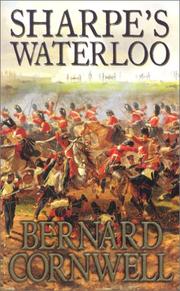
Bernard Cornwell - Sharpe's Waterloo
and another one I thought of myself. Not so much for historical input, but to get a view of how misinformed British readers can be about the battle

Tuesday, 4 December 2012

Megagames in 2013

Megagame Makers have set their programme for 2013. If you haven't played in a megagame yet, you should definitely try it. These are all exciting subjects and will deliver a momentous experience of time pressure, meticulous planning, courageous leadership and wheeling and dealing.


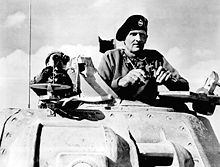
ENDGAME - The culmination in North Africa 1943. The follow-up to last year´s anniversary game of the Battle of El Alamein now sees the Axis troops defending their last foothold on the African continent. An operational game that will see you lead the remnants of the Afrika Korps, the Eight Army and motley reinforcements of Italians, Americans and French.
London - Saturday 2 March 2013 


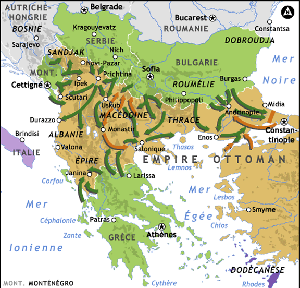
Rehearsal For Armageddon - The Balkan Wars 1912-13. A hundred years ago the powder keg of Europe exploded as the Balkan states turned first on the ailing Ottoman Empire and then on each other. Taste the challenge of marshaling a third rate army to battle or cleaning up the mess at the negotiating table.
London - Saturday 1 June 2013  


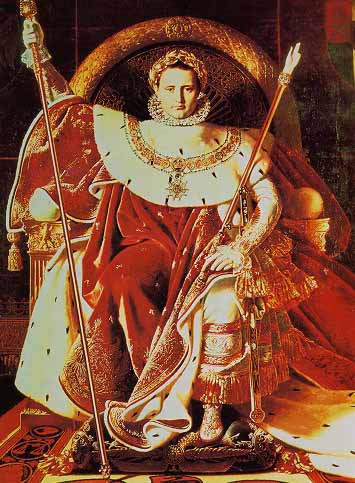
Master of Europe 1813 - Napoleon's campaign in Germany: Two centuries ago the three emperors of France, Russia and Austria-Hungary (and the kings of Sweden and Prussia, not to mention a host of minor German princes) slugged it out on the fields around Leipzig to determine the fate of Europe. Tough operational choices for leaders of multinational armies and tough diplomatic shenanigans for diplomats of competing powers.
London - Saturday 21 September 2013 


End of the Beginning: The Battle of El Alamein:  Can the Eight Army emulate its historical success (or avoid Monty's historical blunders, depending on which interpretation you hold)?  
Leeds - date to be announced, October 2013


ALEA IACTA EST ITERUM - Crisis in Rome 60 BC: As the Roman Republic enters its death throes, abundantly talented and abundantly ambitious men like Pompeius, Crassus and Caesar make their bid for the remains against defenders of the corrupted senator class like Cato and Cicero. Epic campaigns across the stormy Mediterranean, through the riotous streets of Rome and the across the clamorous Senate floor.
London -  date to be announced, November 2013


To get into the mood, read this great report of last month´s Urban Nightmare game, which pitted an urban administration against a zombie outbreak.

You can also join Megagame Makers facebook page, and see how the development of these games is progressing or read player´s experiences.