
Showing posts with label design. Show all posts
Showing posts with label design. Show all posts
Tuesday, 29 November 2016
Blog recommendation: How to kill a rational peasant
Just a notice that Brian Train put a very interesting post on his blog. It brings together three strands of interest for me: theories about rational peasants that I encountered during my PhD research, Adam Curtis BBC blog, one of the most fascinating documentary makers I've come across and Brian Train himself, a game designer whose approach and integrity I admire. If you are interested in counterinsurgency, the war in Vietnam, or even just the small part that gaming played in it, then this is a must-read/view


Saturday, 31 May 2014
Megagames and LARPs: Food for Thought
Two weeks
ago I was invited to do a demonstration of a megagame at the PLAY Masterclass by the Dutch Society of Play. The Society of Play aims at increasing the use of games in Dutch education
and heritage institutions. The day provided a number of examples of game forms,
but also three interesting talks on the subject.

In the following posts I want to go into a few things that I took away from the talks by Morgan Jarl, a Swede with long experience of designing and running games and especially LARPS. His first talks focused on using LARPs for educational purposes. You can find the presentation slides here.

You can try to add as much character to a game as you can, but that might not work for your purpose because...
I'm used to being on the part of the spectrum where you argue between simulation and mechanics, ie where you balance the model between the two or try to find solutions where you can retain as much of both. But one of the problems in many board and miniature wargames is that you spend your effort on that instead of immersion or narrative and it becomes empty, a pure puzzle and in a sense devoid of meaning.
This is probably why LARPs recruit easily from tabletop rpgs and megagames recruit from boardgames and miniature wargames. But both can relate closely to Ameritrash games because they combine these four elements. In can't see a megagame like Operation Market Garden gaining as enthusiastic a response from the board gaming crowd of Shut Up & Sit Down as Watch the Skies! did.
So a good thing in design is thinking about which groups you want to engage and in what way and how to write it accordingly. Do you go for one type or do you try to cater to several groups?
In the following posts I want to go into a few things that I took away from the talks by Morgan Jarl, a Swede with long experience of designing and running games and especially LARPS. His first talks focused on using LARPs for educational purposes. You can find the presentation slides here.
Short aside: it is good to realise that there is
more to LARP than fake pointy ears and foam swords. Especially in Scandinavia there has been a development towards
different settings and more emotionally involving story lines. There is an inspiring
collection of examples from Nordic LARPs available online for free.
Megagames
and LARP
Although megagames
and LARPs are strands of the larger family of ‘real life gaming’ and that these
strands can occasionally come very close (because both focus heavily on human interaction) , there are some general distinctions
you could make between the two. LARP which lays more emphasis on immersion,
collaboration and artistic vision and such comes closer to theatre. Megagames
tend more towards hierarchy, decision making and conflict. But as said, some
megagames have come closer to mass role playing and some LARPs contain
hierarchies and conflicts.
The
different levels of immersion in the role might roughly be described in terms of role
and character. Players in megagames generally adopt a role like prime minister,
general or staff officer while in LARP they more often adopt a character, where
players find further motivation in the personal life. Again, many megagames
have personal briefings for players, or invest their personage with additional
motives during the game, and this is a generalisation.
You can try to add as much character to a game as you can, but that might not work for your purpose because...
Types of
games… and gamers
Morgan identified
four types of game, whether they were based on a narrative, on immersion, on
simulation or on the mechanics. I then realised that this might match players' preferences for types of games. Some people like story telling, others role
playing, others want to recreate and still others focus on mastering the rules
and winning.
I'm used to being on the part of the spectrum where you argue between simulation and mechanics, ie where you balance the model between the two or try to find solutions where you can retain as much of both. But one of the problems in many board and miniature wargames is that you spend your effort on that instead of immersion or narrative and it becomes empty, a pure puzzle and in a sense devoid of meaning.
This is probably why LARPs recruit easily from tabletop rpgs and megagames recruit from boardgames and miniature wargames. But both can relate closely to Ameritrash games because they combine these four elements. In can't see a megagame like Operation Market Garden gaining as enthusiastic a response from the board gaming crowd of Shut Up & Sit Down as Watch the Skies! did.
So a good thing in design is thinking about which groups you want to engage and in what way and how to write it accordingly. Do you go for one type or do you try to cater to several groups?
Game structure
As all games
have at least a few rules (if only on conduct and setting), each game needs an
introduction or briefing. After the game, it is also necessary to have a debriefing,
not only to bring all the strands back together, but also to discuss
experiences and learning.
You can do this as one cycle, but there’s also the possibility of using debriefs halfway through the game or more often to bring every player up to the same level of information or to insert new elements into the game. As an alternative you can do this between games, like in a rpg or miniature wargames campaign. But I like the idea of using this halfway feedback loop in a game.
You can do this as one cycle, but there’s also the possibility of using debriefs halfway through the game or more often to bring every player up to the same level of information or to insert new elements into the game. As an alternative you can do this between games, like in a rpg or miniature wargames campaign. But I like the idea of using this halfway feedback loop in a game.
Next up:
learning through games…
Friday, 11 April 2014
The Mechanics of Violence
Interesting outcome. New research links aggression after video games to the mechanisms rather than violent content. So it´s the designers fault?
Could this also be true for analogue games? Are wargamers happier after a bout of crisp Black Powder and aggravated after a spell of Barkerese?
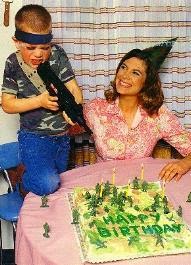
Do people feel less aggressive after playing an 'elegant' Knizia design and driven to rage by the disorganised, misspelled and obtuse collection of half sentences that the publisher of Luna Llena calls the rulebook?
I wouldn't be surprised.
Could this also be true for analogue games? Are wargamers happier after a bout of crisp Black Powder and aggravated after a spell of Barkerese?
Do people feel less aggressive after playing an 'elegant' Knizia design and driven to rage by the disorganised, misspelled and obtuse collection of half sentences that the publisher of Luna Llena calls the rulebook?
I wouldn't be surprised.
Sunday, 9 March 2014
The Social in analogue games
I'd like to point you to this thought provoking post on social gaming on designer site Gamesbrief. It is about computer games, but I think the golden question is: can miniature and board game companies use these same techniques? I think they can, and they should. The technology is there.
It seems analogue game designers are too busy designing mechanisms rather than building a product to make money. And apparently, analogue publishers are still behind the video game, movie and music businesses.
Obviously the technologies involved have to be different than for video games, but it shouldn´t be too hard to develop a multimedia strategy to promote a game. Fans have shown themselves to be only too happy to contribute.
So if you design miniatures, why not set up a Pinterest or Instagram page where people can post their efforts? Why not reward them? Why not bring them together? Why not offer them workshops?
Or if you design games, use your fans to test play. Challenge them to 'break' the game. Invite them to promote your game (like Too Fat Lardies does). Incorporate their story lines in a universe of stories around your game.
Of course, that means you delegate some of the control over your creation to others. That's nothing new in RPGs, so why not do it? Games Workshop could have had all that, but they left that huge social gap up for grabs. Who is going to jump in it?
 |
| From Gamesbrief |
It seems analogue game designers are too busy designing mechanisms rather than building a product to make money. And apparently, analogue publishers are still behind the video game, movie and music businesses.
Obviously the technologies involved have to be different than for video games, but it shouldn´t be too hard to develop a multimedia strategy to promote a game. Fans have shown themselves to be only too happy to contribute.
So if you design miniatures, why not set up a Pinterest or Instagram page where people can post their efforts? Why not reward them? Why not bring them together? Why not offer them workshops?
Or if you design games, use your fans to test play. Challenge them to 'break' the game. Invite them to promote your game (like Too Fat Lardies does). Incorporate their story lines in a universe of stories around your game.
Of course, that means you delegate some of the control over your creation to others. That's nothing new in RPGs, so why not do it? Games Workshop could have had all that, but they left that huge social gap up for grabs. Who is going to jump in it?
Friday, 6 September 2013
Four Men in a Balloon: Featherstone, Gygax, Reiswitz and Barker
In yesterday's post I made a reference to Gary Gygax, major Von Reiswitz and Phil Barker. I'll explain, as promised.
As I discovered megagaming in 1993 I also came into contact with Chestnut Lodge Wargames Group in London and became a loyal but not very active member. But at least I get my copy of the club magazine, Military Muddling with reports on design sessions and I occasionally go to meetings, like the annual picnic or games weekend.
At the games weekend there's two days of game design sessions, with the evenings available for after dinner games. One of the few times I was around (in 1996) it was a good session of Four Men in a Balloon, where all the passengers had to make their case not to be the one thrown out this round. In this case the passengers were Don Featherstone, Gary Gygax, major Von Reiswitz and Phil Barker arguing their value to the wargaming hobby. And I represented the latter.
Phil was the second to be released after the major, but in the end Gary Gygax survived rather than Don Featherstone. It was something to do with polearms, I believe. I think that is a good indication of the mindset at Chestnut Lodge, with a heavy emphasis on role playing even in a miniatures game.
But the best after dinner game was the bard competition we had afterwards. The idea was that we were given an episode of the life of Harald Hardrada and then turn this into Nordic poetry, so with lots of alliteration, reference to mythical animals etc. Jonathan Pickles put up a copy of Snorri Sturluson's King Harald's Saga for the winner and that proved to be me.
I never read the full story, but it is obvious that Harald was a bit of a poser. He traveled around much of the known world, but always seemed to get into trouble and be forced to move on rather in a hurry. In the end he lost the battle of Stamford Bridge against Harold Godwinson a few weeks before the latter was beaten by William of Normandy, later known as the Conqueror, at Hastings.
Harald's predicaments were of course part of the amusement, as the ´bards´ had to gloss over these inconveniences and portray them in a more positive light. In most cases I opted for outright lies rather than spinning the evidence. I suspect that my reward was more out of kindness to the foreigner who had come so far to join in the proceedings than on the basis of my superior poetic skills in a second language.
But coming back to yesterday´s theme it is interesting that although my memory is hazy, these games I remember much better than many regular miniature games. Just like I remember the Peasant´s Crusade game that Graham Hockley put on that weekend, which was a string of grown men weaving around a playground à la Polonaise, with every break in the chain signifying losses to the expedition. You can imagine that once we´d crossed a few obstacles our chances of ever reaching Jerusalem, let alone ´liberating´ it, were null.
That´s the power of fun for you.
 |
| More about this below... |
At the games weekend there's two days of game design sessions, with the evenings available for after dinner games. One of the few times I was around (in 1996) it was a good session of Four Men in a Balloon, where all the passengers had to make their case not to be the one thrown out this round. In this case the passengers were Don Featherstone, Gary Gygax, major Von Reiswitz and Phil Barker arguing their value to the wargaming hobby. And I represented the latter.
Phil was the second to be released after the major, but in the end Gary Gygax survived rather than Don Featherstone. It was something to do with polearms, I believe. I think that is a good indication of the mindset at Chestnut Lodge, with a heavy emphasis on role playing even in a miniatures game.
 |
| The guys even autographed my copy! |
But the best after dinner game was the bard competition we had afterwards. The idea was that we were given an episode of the life of Harald Hardrada and then turn this into Nordic poetry, so with lots of alliteration, reference to mythical animals etc. Jonathan Pickles put up a copy of Snorri Sturluson's King Harald's Saga for the winner and that proved to be me.
I never read the full story, but it is obvious that Harald was a bit of a poser. He traveled around much of the known world, but always seemed to get into trouble and be forced to move on rather in a hurry. In the end he lost the battle of Stamford Bridge against Harold Godwinson a few weeks before the latter was beaten by William of Normandy, later known as the Conqueror, at Hastings.
Harald's predicaments were of course part of the amusement, as the ´bards´ had to gloss over these inconveniences and portray them in a more positive light. In most cases I opted for outright lies rather than spinning the evidence. I suspect that my reward was more out of kindness to the foreigner who had come so far to join in the proceedings than on the basis of my superior poetic skills in a second language.
But coming back to yesterday´s theme it is interesting that although my memory is hazy, these games I remember much better than many regular miniature games. Just like I remember the Peasant´s Crusade game that Graham Hockley put on that weekend, which was a string of grown men weaving around a playground à la Polonaise, with every break in the chain signifying losses to the expedition. You can imagine that once we´d crossed a few obstacles our chances of ever reaching Jerusalem, let alone ´liberating´ it, were null.
That´s the power of fun for you.
Tuesday, 27 August 2013
More thoughts on miniatures rules and the future
Yesterday´s post was about some favourite miniature rule sets, but later that night I also had a discussion about rule sets at the birthday of Michel with Hans and Ed.
Hans is working on a fantasy rule set (For Reign or Ruin, see him testing it here) and very interested in what happens before the battle and how that affects the battle. Delays in the arrival of troops or in their deployment would offer their enemies opportunities for pre-emptive attacks or send an battle plan into disarray. Pre-battle speeches could lift the hearts of the troops.
Ed is thinking not so much of a rule set, but more a scenario generator because he feels that in many rule sets there is no context to the battle and organising and above all keeping campaigns going is hard work.
 |
| Maurice, by Sam Mustafa |
Another example of a new direction in wargaming is Dux Britanniarum, another Too Fat Lardies set about the struggle between Arthurian British and Anglo-Saxon invaders. The rules focus on the main characters in the war band as it raids or defends the frontier over several years. With rudimentary character generation like in an RPG and with opportunities to rise through the hierarchy and expand your force, the simple campaign rules offer a structure to each battle.
 |
| Dux Britanniarum by Too Fat Lardies |
What I like about the rules is that they are aimed on a small period of time (you know, just a century or two) and move away from the generic setting so common in ancient and medieval wargaming (why is there no rule set just for the Pelopponesian War?). The other side of the coin is that it offers only a relatively small sales volume at reasonably low costs for the designer.
I think there are opportunities for new products by combining card decks a la Maurice with limited ancients/medieval settings like Dux Britanniarum. The card sets build a mini campaign or act as a scenario builder, compatible with whatever rules people use to fight their battles. You could link it to new miniatures ranges, but I think there are also advantages in offering players new ways to use armies that they already have.
The upside is that creating a deck is not expensive. You can sell the decks themselves or offer them via print on demand services. It requires some research to include the kind of events and characters and the dynamics of a particular conflict or campaign. There are a lot of ancient and medieval wars and campaigns so this adds up.
A possible solution to that challenge is to provide a much larger set of cards that players can use to build decks for particular campaigns or wars themselves. It is a good way to engage players with the product. If you allow them to publish their decks on a forum it will build a community or when they publish in magazines they advertise for you.
What do you think? Is this something you are looking for? Do you think it is viable?
Monday, 26 August 2013
The best miniature wargame rules (according to a non-representative selection of wargamers)
A couple of weeks ago I met Jasper and Jan-Willem and we discussed our favourite and not-so favourite miniature rule sets. This set me thinking.
Jan-Willems favourite ruleset is G.A.S.L.I.G.H.T. It is straightforward and fast. The game allows for storytelling and is easily adaptable for different settings, something Jan-Willem has done for several participation games.
But he really dislikes De Bellis Multitudinis, often known as DBM. It was a totally regressive development of the ancients ruleset De Bellis Antiquitatis, which was quite innovative. It introduced the now widely accepted PIPs and defined only a dozen troop types based on their role on the battlefield, assuming that weaponry and armour were less important. DBM however, recomplicated the game and reintroduced differences in armour etc, thus negating much that was good about DBA. It also did so in an excruciatingly bad writing style but most of all it was a bad ruleset and no fun.
Note; also check out the excellent fantasy rules Hordes of the Things, which keeps the spirit of DBA and in my humble opinion, makes it even better!
The newish Black Powder ruleset is Jasper´s favourite. It fast and simple. Rather than focussed on tournament battles it aims at scenarios. Jasper likes that it works well as a toolbox for more specific supplements, thus reflecting the character of the period.
My favourite is Stonewall Jackson's Shenandoah Valley Campaign. The rules for battles are really simple but try to reflect the main elements of American Civil War combat. But the brilliance of this set is the campaign system in which all players are Union commanders fighting againt the brilliant Jackson. In fact their main objective is not to win battles but to gain the most political capital out of the campaign which can be done by sending off troops to other armies, politicking in Washington and and avoiding being attacked by Jackson. Just reading the rules brings a smile to your face.
Another favourite ruleset of mine is Bag the Hun / Algernon Pulls It Off, Too Fat Lardies' WW2 and WW1 Staffel level air combat rules. Lots of focus on experience of pilots, maneouvres and formations, not so much on the technical aspects of the planes. As you play with named pilots, seeing them shot down doesn't feel well. Too bad they added more rules in later editions.
Jasper and I are also impressed with Muskets & Tomahawks. These are 18th century skirmish rules for North America with the emphasis on scenarios and storytelling. The rules are fast and simple (yes, you're spotting a pattern here).
We all agreed that we liked rule sets which paid more attention to the game and historical feel than historical detail and complexity. Easy to pick up and hard to master, but more importantly: fun and with room for story. There are of course people with other preferences, like tournament players and historical buffs who would probably come up with other favourites.
So what are your favourites? And why? Did we miss something? Or do you think these rules actually suck?
 |
| G.A.S.L.I.G.H.T. by Buck Surdu and De Bellis Multitudinis by Wargames Research Group |
Jan-Willems favourite ruleset is G.A.S.L.I.G.H.T. It is straightforward and fast. The game allows for storytelling and is easily adaptable for different settings, something Jan-Willem has done for several participation games.
But he really dislikes De Bellis Multitudinis, often known as DBM. It was a totally regressive development of the ancients ruleset De Bellis Antiquitatis, which was quite innovative. It introduced the now widely accepted PIPs and defined only a dozen troop types based on their role on the battlefield, assuming that weaponry and armour were less important. DBM however, recomplicated the game and reintroduced differences in armour etc, thus negating much that was good about DBA. It also did so in an excruciatingly bad writing style but most of all it was a bad ruleset and no fun.
Note; also check out the excellent fantasy rules Hordes of the Things, which keeps the spirit of DBA and in my humble opinion, makes it even better!
 |
| Black Powder by Warlord Games |
The newish Black Powder ruleset is Jasper´s favourite. It fast and simple. Rather than focussed on tournament battles it aims at scenarios. Jasper likes that it works well as a toolbox for more specific supplements, thus reflecting the character of the period.
 |
| Stonewall Jackson's Shenandoah Valley Campaign by Real Time Wargames |
My favourite is Stonewall Jackson's Shenandoah Valley Campaign. The rules for battles are really simple but try to reflect the main elements of American Civil War combat. But the brilliance of this set is the campaign system in which all players are Union commanders fighting againt the brilliant Jackson. In fact their main objective is not to win battles but to gain the most political capital out of the campaign which can be done by sending off troops to other armies, politicking in Washington and and avoiding being attacked by Jackson. Just reading the rules brings a smile to your face.
 |
| Bag the Hun and Algernon Pulls it Off by Too Fat Lardies |
Another favourite ruleset of mine is Bag the Hun / Algernon Pulls It Off, Too Fat Lardies' WW2 and WW1 Staffel level air combat rules. Lots of focus on experience of pilots, maneouvres and formations, not so much on the technical aspects of the planes. As you play with named pilots, seeing them shot down doesn't feel well. Too bad they added more rules in later editions.
 |
| Muskets & Tomahawks by Studio Tomahawk |
Jasper and I are also impressed with Muskets & Tomahawks. These are 18th century skirmish rules for North America with the emphasis on scenarios and storytelling. The rules are fast and simple (yes, you're spotting a pattern here).
We all agreed that we liked rule sets which paid more attention to the game and historical feel than historical detail and complexity. Easy to pick up and hard to master, but more importantly: fun and with room for story. There are of course people with other preferences, like tournament players and historical buffs who would probably come up with other favourites.
So what are your favourites? And why? Did we miss something? Or do you think these rules actually suck?
Friday, 7 June 2013
Maps for Master of Europe
Jim gave me a set of maps to take with me to the Netherlands: player and umpire maps for Master of Europe. The game is on for June 22nd in Nijmegen. Casting is done and handbooks and invitations will go out later this week.
 |
| Note the larger scale umpire map! |
Sunday, 2 June 2013
How I love going to Chestnut Lodge
Sunday I joined a meeting of Chestnut Lodge Wargames Group, a rare pleasure because megagames and CLWG don't often coincide.
We had 3 great sessions, the first set in the A Very British Civil War alternate universe where Britain descends into vivi war after Edward decides to ascend the throne with Wallis Simpson as queen.
It was a tactical scenario by John Seaton on attempts by fascists and worker militias to capture the neutral borough of Croydon, including the important airport.
Next was a session discussing Muku Patel's design for an army group level game on the opening stages of WWI on the eastern front.
We discussed some design parameters (which period, what area, at what level of resolution, the character of combat on the eastern front (and how it differed from the west) and some mechanics (trading speed for combat effectiveness, effect of terrain, intensity).
Last was a meeting of the board of a large multinational discussing how it would make the best use of revolutionary new technology.
We faced several fundamental decisions. Given its cooperation with a superpower, how would that affect it's ability to trade with others? What was our window in which we were the sole owners of this technology, and how could we leverage this towards customers and competition?
A busy day with some fascinating insights, good discussion and inspiration

We had 3 great sessions, the first set in the A Very British Civil War alternate universe where Britain descends into vivi war after Edward decides to ascend the throne with Wallis Simpson as queen.
It was a tactical scenario by John Seaton on attempts by fascists and worker militias to capture the neutral borough of Croydon, including the important airport.
Next was a session discussing Muku Patel's design for an army group level game on the opening stages of WWI on the eastern front.
We discussed some design parameters (which period, what area, at what level of resolution, the character of combat on the eastern front (and how it differed from the west) and some mechanics (trading speed for combat effectiveness, effect of terrain, intensity).
Last was a meeting of the board of a large multinational discussing how it would make the best use of revolutionary new technology.
We faced several fundamental decisions. Given its cooperation with a superpower, how would that affect it's ability to trade with others? What was our window in which we were the sole owners of this technology, and how could we leverage this towards customers and competition?
A busy day with some fascinating insights, good discussion and inspiration

Thursday, 29 November 2012
The Joy and Art of Participation Games
A couple of weeks ago I told you I was excited about two projects which I couldn’t tell about yet. And now I can reveal the first one: we’re going to make an e-book on participation games.
 |
| Mummy participation game, 2003. Photo Rob Koppendraier |
So who are 'we' and how did this come about? We are wargaming club Murphy’s Heroes from Delft , the Netherlands
As committee of the club, but more so because most of us have been a member of this club from the start, or a very long time at least, we wanted to do something special. Something that:
- we could give to he members to celebrate this milestone
- we could give to non-members to show what an awesome bunch of people we are
- would show our creativity and the things our club is best known for
- would engage lots of people in creating it
 |
| A-Team participation game, 2010 |
We came up with participation games. The club has a long tradition of games designed to attract strangers to our tables and engage. This made us a well known presence in the Dutch and international gaming scene and a welcome guest at shows of other clubs. It is also a source of great pride.
Participation games are different from just demonstration games because they don’t focus on the beautiful terrain and miniatures (although that can also be an important part) but on getting people to join in and experience the fun of playing. This requires an extra effort to design rules and make them work towards speed, action and fun.
But while staging a participation game is fun and rewarding, we feel it would be even better if we collect our experience and give it away, This will not only remind people of what we’ve done, it will also encourage them to join in. Because that is what we want to do the most: persuade people to do participation games themselves.
 |
| FRAG participation game, 2005. Photo Rob Koppendraier |
So in 2013 we want to create Murphy´s Heroes Cookbook for Participation Games. We want to do this with our club members, but also with those from outside. Many clubs have designed successful participation games and we would like to include that experience and those examples into the cookbook. For example, I´m thinking of the legendary Breakfast at the Bastion game that was based on a scene from the Three Musketeers and which the Pike & Shot Society used to run,.
I hope that those of you that follow this blog and have experience with participation games are willing to come forward with examples, ideas, experience or even gaming materials and pictures of games they’ve designed and run. Or the games that you will design this year out of inspiration.
It is our intention to collect these throughout 2013 and publish the full version of MHC around May 2014.
Maybe you can understand now why I was so excited.
Wednesday, 22 August 2012
"Western" boardgaming and egalitarianism
Sagrilarius put some interesting questions in his blog " The Culture of Gaming, and Vice Versa". I was struck especially by one point he made, in that "western" society doesn't accept hierarchical games.
Sagrilarius wrote: "Games with binding contracts or hierarchical player roles are simply unheard of in the genre, not because they aren't fundamentally sound, but because they simply don't occur to the usual suspects that drive boardgaming's technological progress. Not just a eurogame thing, this a western game thing." Not to leave my thoughts in the comments section, I put them up here.

The comment may strike true for boardgames (although the Great Dalmuti springs to mind as the obvious exception) but is patently untrue if you look at other forms of gaming. In games with many players there is the opportunity for both hierarchical and 'contractual' relationships.
If you look at the mass player games occuring online, the hierarchical (and diplomatic) aspects are very clear, with structures like guilds, corporations, alliances and clans. In these structures some players take leading roles, whether formally or informally. Another aspect is specialisation of character types and team balance.
Another form of gaming which is inherently hierarchical is megagaming , games which involved 25 players and more. Player are grouped in hierarchies of teams, which in turn are hierarchical. In "The Last War ", a two day game about the latter half of WWII, about 150 players were grouped into 35 political or military teams , ranging for example from Roosevelt's cabinet through the Joint Chiefs of Staff to theater headquarters.
In both types of games players seem to happily accept the different roles, some relishing in the opportunity to exert leadership, others preferring to stay out of the limelight. Some people take pride in the team effort.
Of course, problems do occur when arguments start. Because this is only a game, and not real life, the extent to which players accept formal authority is limited. And even though there are limits to formal authority in real life (think of Guderian pushing on to the Channel Coast in May 1940, despite orders to halt), the options to punish players for disloyalty and insubordination in games are much less. On the other hand there is greater opportunity for players to excel on merrit, charisma, setting the example or by taking the lead.
I think the lack of hierarchy in boardgames has more to do with the format of a small group of players that need about an even chance of winning, than with cultural traits. Interestingly, informal hierarchy also works with semi-cooperative boardgames, especially if connected to special powers connected to certain offices, like in Republic of Rome and Battlestar Galactica.

So while there is a cultural propensity in the west for egalitarianism, it is not absolute, and it would be very interesting to see comparative studies of gaming culture, just like is being done for business culture (where for example the German business culture is more hierarchical than the Dutch). Do Chinese MMRPG player groups have different forms of organisations than Americans, or British?
There is an academic literature building up that looks at these kinds of dynamic in computer games, but I'm not sure it's as easy to do the same for boardgames.
An earlier version of this post was published on Fortress Ameritrash
Sagrilarius wrote: "Games with binding contracts or hierarchical player roles are simply unheard of in the genre, not because they aren't fundamentally sound, but because they simply don't occur to the usual suspects that drive boardgaming's technological progress. Not just a eurogame thing, this a western game thing." Not to leave my thoughts in the comments section, I put them up here.
The comment may strike true for boardgames (although the Great Dalmuti springs to mind as the obvious exception) but is patently untrue if you look at other forms of gaming. In games with many players there is the opportunity for both hierarchical and 'contractual' relationships.
If you look at the mass player games occuring online, the hierarchical (and diplomatic) aspects are very clear, with structures like guilds, corporations, alliances and clans. In these structures some players take leading roles, whether formally or informally. Another aspect is specialisation of character types and team balance.
Another form of gaming which is inherently hierarchical is megagaming , games which involved 25 players and more. Player are grouped in hierarchies of teams, which in turn are hierarchical. In "The Last War ", a two day game about the latter half of WWII, about 150 players were grouped into 35 political or military teams , ranging for example from Roosevelt's cabinet through the Joint Chiefs of Staff to theater headquarters.
In both types of games players seem to happily accept the different roles, some relishing in the opportunity to exert leadership, others preferring to stay out of the limelight. Some people take pride in the team effort.
Of course, problems do occur when arguments start. Because this is only a game, and not real life, the extent to which players accept formal authority is limited. And even though there are limits to formal authority in real life (think of Guderian pushing on to the Channel Coast in May 1940, despite orders to halt), the options to punish players for disloyalty and insubordination in games are much less. On the other hand there is greater opportunity for players to excel on merrit, charisma, setting the example or by taking the lead.
I think the lack of hierarchy in boardgames has more to do with the format of a small group of players that need about an even chance of winning, than with cultural traits. Interestingly, informal hierarchy also works with semi-cooperative boardgames, especially if connected to special powers connected to certain offices, like in Republic of Rome and Battlestar Galactica.
So while there is a cultural propensity in the west for egalitarianism, it is not absolute, and it would be very interesting to see comparative studies of gaming culture, just like is being done for business culture (where for example the German business culture is more hierarchical than the Dutch). Do Chinese MMRPG player groups have different forms of organisations than Americans, or British?
There is an academic literature building up that looks at these kinds of dynamic in computer games, but I'm not sure it's as easy to do the same for boardgames.
An earlier version of this post was published on Fortress Ameritrash
Saturday, 7 July 2012
Jim Wallman, my favourite game designer
My game designing hero is Jim Wallman, a friendly guy from South London with a warped mind and the English sense of humour. He has a good grasp of (military) technology and history, of popular culture and of gaming. One of my fondest memories of him is sitting together on the ground in a wargames convention hall and trying to design a game on global crime networks.
Jim started out playing ith the likes of miniature wargaming icons Paddy Griffith and Donald Featherstone, then became involved in Wargame Developments, an innovative English game design group. Their foremost inspirations were miniature wargames and Kriegsspiel and the games mostly assumed pretty good knowledge of the subject to play. The club was a fertile ground for aspiring game designers and has done a lot in the development of matrix games for example.

Jim was one of the founding members of Chestnut Lodge Wargames Group in South London, which over the years has dedicated itself to the design of new games. I find it a very inspiring club of people that are supportive and critical of game design and I’ve played some of the most fun games ever there.
The range of game formats and mechanisms Jim has used is just astounding and he really uses the form he thinks fits the theme and approach best. They range from WWII company actions and samurai skirmish to 18th century English colonels leading their regiments and large scale space battles. Jim has put most of his game designs online for everyone to benefit and has been glad to assist and discuss with aspiring game designers and players like me. It's even led to a translation by an Italian group.
His designs assume that players don´t try to bend the rules and play ´historically´, mostly assisted by umpires. Also he doesn´t believe in complex rules, because player interaction is more important to him. A lot of effort is taken to give perspective through player briefings. Of course, the use of umpires allows rules to be kept to covering only the most likely events, and let wizard wheezes and exceptions be handled separately. As a result, Jim hasn´t designed many board games as he finds the medium too restrictive, but I´ve got a fine example below.

In the early 80s Jim also started doing megagames and over the years has designed and organised dozens of them. After a couple of years he and a couple of friends/designers set up Megagame Makers. In 2005 the organised their ‘hundredth’ megagame, The Last War, with about 150 players and umpires fighting WWII from January 1942 to the bitter end in two days. Search out their archive of megagames and stand in awe of the number of games they actually put on over the years, especially if you consider what a shitload of work these games take to organise. I’ll go deeper into megagames elsewhere.
And these are my favourite (non-mega)game designs of his:

Tank duel: a double blind tank dog fight. The teams are on opposite sides of a curtain with the terrain duplicated. They only see their own tank until the enemy gets into the line of sight. Both teams consist of commander, gunner, loader and driver (depending on tank type of course). The commander has to order each of the other crew members on direction, type of ammo use, firing etc etc. By keeping the pace of the game up it becomes extremely tense and fast, with most games done in under 15 minutes.
My worst session was against an experienced team that used an antitank gun. All the time I was wondering why they hardly gave any orders. Until they hit me while turning the corner.
Decapitation: a boardgame of the ‘Freedonian attempts’ to take out an ‘Evil Dictator’ before they invade his country to bring peace, democracy and prosperity. The Freedonians have intelligence teams on the ground and radio listening to pinpoint the dictator’s whereabouts, but the latter has a few stand ins to deceive them. Of course, bombing and cruise missiles can have collateral damage that will lower public support for the war. This game shows what is possible in designing and producing a game as it was ready before the Iraq war was over. The map is here.

The Universe: the Universe is actually a living background to a whole range of games, including a strategic campaign Humanity will Prevail (running for over 10 years now), pirates (erm… independent traders), space marines and ships’ crew role playing campaigns, large space battles, and sports.
The major polities in the campaign have gained an eerie level of realness over the years as players have added their political styles and popular cultures. Political summits are hosted, battles fought, propaganda wars waged and elections rigged.

I used to sort of rule the government of the postcommunist Sirian Socialist Republic, an egalitarian bureaucracy that has greatly expanded its robot workforce to lessen the burden of human labour. When not in a meeting, the SSR leads the opposition to the Evil Empire of Sol, unless distracted by piracy, terrorism, natural disasters, alien invasions or out of control AIs.
Do have a look. And enjoy!
This was posted earlier to Fortress Ameritrash
Jim started out playing ith the likes of miniature wargaming icons Paddy Griffith and Donald Featherstone, then became involved in Wargame Developments, an innovative English game design group. Their foremost inspirations were miniature wargames and Kriegsspiel and the games mostly assumed pretty good knowledge of the subject to play. The club was a fertile ground for aspiring game designers and has done a lot in the development of matrix games for example.

Jim was one of the founding members of Chestnut Lodge Wargames Group in South London, which over the years has dedicated itself to the design of new games. I find it a very inspiring club of people that are supportive and critical of game design and I’ve played some of the most fun games ever there.
The range of game formats and mechanisms Jim has used is just astounding and he really uses the form he thinks fits the theme and approach best. They range from WWII company actions and samurai skirmish to 18th century English colonels leading their regiments and large scale space battles. Jim has put most of his game designs online for everyone to benefit and has been glad to assist and discuss with aspiring game designers and players like me. It's even led to a translation by an Italian group.
His designs assume that players don´t try to bend the rules and play ´historically´, mostly assisted by umpires. Also he doesn´t believe in complex rules, because player interaction is more important to him. A lot of effort is taken to give perspective through player briefings. Of course, the use of umpires allows rules to be kept to covering only the most likely events, and let wizard wheezes and exceptions be handled separately. As a result, Jim hasn´t designed many board games as he finds the medium too restrictive, but I´ve got a fine example below.

In the early 80s Jim also started doing megagames and over the years has designed and organised dozens of them. After a couple of years he and a couple of friends/designers set up Megagame Makers. In 2005 the organised their ‘hundredth’ megagame, The Last War, with about 150 players and umpires fighting WWII from January 1942 to the bitter end in two days. Search out their archive of megagames and stand in awe of the number of games they actually put on over the years, especially if you consider what a shitload of work these games take to organise. I’ll go deeper into megagames elsewhere.
And these are my favourite (non-mega)game designs of his:

Tank duel: a double blind tank dog fight. The teams are on opposite sides of a curtain with the terrain duplicated. They only see their own tank until the enemy gets into the line of sight. Both teams consist of commander, gunner, loader and driver (depending on tank type of course). The commander has to order each of the other crew members on direction, type of ammo use, firing etc etc. By keeping the pace of the game up it becomes extremely tense and fast, with most games done in under 15 minutes.
My worst session was against an experienced team that used an antitank gun. All the time I was wondering why they hardly gave any orders. Until they hit me while turning the corner.
Decapitation: a boardgame of the ‘Freedonian attempts’ to take out an ‘Evil Dictator’ before they invade his country to bring peace, democracy and prosperity. The Freedonians have intelligence teams on the ground and radio listening to pinpoint the dictator’s whereabouts, but the latter has a few stand ins to deceive them. Of course, bombing and cruise missiles can have collateral damage that will lower public support for the war. This game shows what is possible in designing and producing a game as it was ready before the Iraq war was over. The map is here.


The Universe: the Universe is actually a living background to a whole range of games, including a strategic campaign Humanity will Prevail (running for over 10 years now), pirates (erm… independent traders), space marines and ships’ crew role playing campaigns, large space battles, and sports.
The major polities in the campaign have gained an eerie level of realness over the years as players have added their political styles and popular cultures. Political summits are hosted, battles fought, propaganda wars waged and elections rigged.

I used to sort of rule the government of the postcommunist Sirian Socialist Republic, an egalitarian bureaucracy that has greatly expanded its robot workforce to lessen the burden of human labour. When not in a meeting, the SSR leads the opposition to the Evil Empire of Sol, unless distracted by piracy, terrorism, natural disasters, alien invasions or out of control AIs.
Do have a look. And enjoy!
This was posted earlier to Fortress Ameritrash
Subscribe to:
Posts (Atom)