Showing posts with label colonial. Show all posts

Saturday, 12 November 2016

No better way to read my mind

Than to watch my recent acquisitions. I'd saved up quite a few book coupons which now have been turned into paper (and some digital books). So what's come in recently?


Remy Limpach, De brandende kampongs van Generaal Spoor

A book's just come out on Dutch atrocities during the Indonesian War of Independence (1945-1949).This has had a considerable impact because these have been dismissed in the 1960s as incidents and this author shows that retributions against the population were widespread, even if not part of policy. It also becomes clear that these occurrences were brought to the attention of higher ranks who actively suppressed the facts. If anybody was still under the impression that Dutch colonial rule was somehow more benevolent than of its contemporaries, that can now be dismissed.


Paul Dawson, Crippled splendour. The French cavalry from Valmy to Toulouse

Also in is the new book by Paul Dawson, a very thorough researcher who has done a lot of work in French archives on French cavalry of the Napoleonic Wars. This book is no change to his previous work in that it focusses on composition of units, replacement horses and logistics over tactics and individual actions. Therefor it is a very valuable companion to most other studies, who tend to focus on the latter.

Pat Harrigan & Matthew Kirschenbau, Zones of Control, Perspectives on Wargaming

Something of a handbook on (war)game design. It has contributions by well known designers such as Peter Perla, Phil Sabin, Brian Train and Joe Miranda. It ranges from historical background to views of the future (but not so much on computer gaming) and from deadly serious gaming for defense to card-driven commercial games to Warhammer 40K. It also includes a chapter on cultural wargaming by Jim Wallman, my favourite game designer, which outlines how games can help bring up unspoken assumptions and behaviour and create discussion about them. Valuable background to a serious study of state of the art wargaming.

James Waterson, Defending Heaven, China's Mongol Wars 1209-1370

An appealing book I picked up at Crisis about the Mongol conquest and loss of China. Waterson thinks the Mongol conquest created the present borders of China (except, notably, Mongolia itself) but also, that it never succeeded in making a mark culturally. Although the Song dynasty in south China was finally defeated, its legacy was the basis for the eventual evictions of the descendants of the great Khans.

Also in (but not dug in as deep yet):
  • Colin Galloway, The American Revolution in Indian Country
  • Edward Erickson, Ottoman Army Effectiveness in World War I
  • Chris Tyerman, How To Plan a Crusade
  • Colin Galloway, The Shawnees and the War for America

Sunday, 5 January 2014

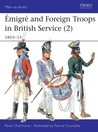
Review: Emigre and Foreign Troops in British Service (2) 1803-15


Emigre and Foreign Troops in British Service (2) 1803-15
Emigre and Foreign Troops in British Service (2) 1803-15 by René Chartrand

My rating: 2 of 5 stars


Second part of Chartrand’s overview of foreign units in British service. As in the revolutionary wars, the British used many foreign units to increase their army. The foreign element in the regular army increased from 17,000 (or about 11%) in early 1804 tot 54,000 (over a fifth) in late 1813.

There was a change in recruiting grounds, however. With access to the continent limited by extended French control and many French émigrées reconciled with the Napoleonic order, the Mediterranean now became a major source of manpower, with Spanish, Italians, Greeks, Albanians, Maltese, Minorcans enlisted. Outside Europe native troops were taken on extensively (in addition to native troops of the East India Company).

Of course, the King’s German Legion and Brunswick contingents still remained as ‘European’ foreigners (but these are treated in separate Osprey books). The 60th regiment also was mostly composed of Germans and other foreigners.

Like its sister book, this is rather an eclectic list of units and uniform details, lacking a overarching narrative, let alone analysis. Only for people with special interest in this subject.


View all my reviews

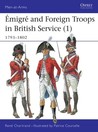
Review: Emigre and Foreign Troops in British Service (1) 1792-1803


Emigre and Foreign Troops in British Service (1) 1792-1803
Emigre and Foreign Troops in British Service (1) 1792-1803 by René Chartrand

My rating: 2 of 5 stars


First part of Chartrand’s overview of foreign units in British service. The 18th century tradition of employing troops from Switzerland and smaller German princedoms was continued and many French émigrées were recruited to fight the fledgling Republic. A number of similar units were taken over from Dutch service after the French overran Holland early 1795. Dutch and French colonial troops were also incorporated when overseas possessions were conquered by British expeditions.

Most of the units were employed in colonial warfare, especially the West Indies, where disease resulted in high rates of deaths. The reasons for employment overseas were probably to lower chances for desertion and to spare British troops from the bad conditions.

Like its sister book, this is rather an eclectic list of units and uniform details, lacking a overarching narrative, let alone analysis. Only for people with special interest in this subject.


View all my reviews

Friday, 3 January 2014

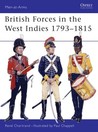
Review: British Forces in the West Indies 1793-1815


British Forces in the West Indies 1793-1815
British Forces in the West Indies 1793-1815 by René Chartrand

My rating: 3 of 5 stars


Overview of British forces in the West Indies during revolutionary and Napoleonic wars. Not generally known is that this was a major theatre of war for the British at the time (also a major market!) where tens of thousands of troops were sent to attack French colonial possessions, the most important being Saint Domingue, even after it became independent. There was serious concern that the slave revolt in Saint Domingue would spread to other colonies, as it did on Dutch Curacao in 1795 and Jamaica in 1796.

This was also a brutal theatre, with maybe as many as 45,000 British troops dying of fever in the decade up to the peace of Amiens in 1802.

The book is a bit eclectic as it includes so many different and often temporary units, like foreign regiments recruited in Europe, local militias and (Dutch)colonial troops from enemies taken into British service. Interestingly also has images of Jamaican Maroons, black troops from Surinam ('redimusi') and Cuban slave hunters with dogs.


View all my reviews

Review: Napoleon's Overseas Army


Napoleon's Overseas Army
Napoleon's Overseas Army by René Chartrand

My rating: 3 of 5 stars


Broad description of the dress and actions of French colonial units during the revolutionary and Napoleonic wars. With the 20 year struggle between France and Great Britain, it is not surprising that fighting also reached France's and the Dutch colonial possessions, as the Britons steadily gobbled up the French empire overseas, with only a short intermission after the Peace of Amiens in 1802.

This book focuses mainly on the Americas, rather than Asia and Africa. The war of independence of the former slave population of Saint Domingue, present day Haïti, features prominently. There's even a short section on the Dutch colonial troops in the West Indies.


View all my reviews