Showing posts with label movie. Show all posts

Friday, 27 September 2019

Another Bridge Too Far?

The Tactical Painter recently published a great post with many good points on Richard Attenborough's 'hidden' message in A Bridge Too Far, and many of them I gladly take on board. It retriggered a train of thought that started last weekend, as I cycled with my friend Diederick from Arnhem to Oosterbeek and then on via Driel and Oosterhout to Nijmegen. We discussed why no one had attempted a new movie about Operation Market Garden recently (it being over 40 years since ABTF).

The church tower at Driel


I figured there is ample room for different perspectives. Quite a lot was left out in ABTF and a lot of time was 'wasted' on episodes that do not drive the grand narrative (eg Dohun/Eddie) but only make sense in light of Attenborough's ulterior motives, as The Tactical Painter shows (I think quite convincingly. You really should read that bit).

And in a sense, the episodes from Band of Brothers relating to Market Garden are one of those possible perspectives. Those combat scenes are excellent. And that is one way to do it, focussing on a part rather than the whole.

And there's so much more to play with. In ABTF there's hardly any time for the vital cutting of Hell's Highway at the crisis of the battle and 101st's US Airborne role in general.

Or what to think of the desperate fights on the 18th and 19th September by the Para's to get into Arnhem? This is where the back of the division was broken, but not always in the best performance. It somehow gets swept up in the Urquhart story in ABTF.

Polish Information Point in Driel

And I guess there might shortly be a Polish movie on Sosabowki's efforts (if there hasn't been one already). His role fits seemlessly into the political narrative of the present Polish government, with the Poles as heroic liberators that are being scapegoated by devious foreigners.

And by the way, where is Monty in all this? Only referenced in archive material.


But some of the most intreaguing choices Attenborough made are on the German side (and this is where I disagree with the Tactical Painter a bit). Rather than as simple foils, I think Attenborough made a conscious decision to only focus on the SS. They are portrayed as tough and ruthless, also probably as a counterpoint to the British lackadaisical approach.

Graebner, the commander of the SS reconnaissance battallion that gets shot up trying to cross the Arnhem bridge, is on the other hand the classic German puppet officer, who hardly utters a word, refusing even to scream as he burns to death.

The German commander in chief, Field Marshal Model, is portrayed as egotistic and incompetent, refusing to blow the bridge in Nijmegen until it is too late. Given Model's experience and competent handling of the German countereffort, this is inaccurate, so Attenborough might have wanted to pose him as a mirror image of Browning.

Looking towards Nijmegen from the spot where 504 PIR crossed the Waal

But nothing about the kampfgruppen on the west of Arnhem holding up the Para's advance, or the motley force commanded by Von Tettau. Nothing on Student, Walther or Chill mounting the vital counterattacks against the corridor. Equally competent to their SS colleagues but somehow showing the Germans as masters of improvisation and very average quality fighting troops didn't fit with the narrative lionising the allied troops. I think a modern movie might focus on them more and show the Germans as more human.


But what would a new movie look like? Another star studded epic involving the cream of international actors? Perhaps less likely than a combination of the Marvel/Disney universes. Or a new British epic in the light of Dunkirk and Darkest Hour? Or do we leave it to the next generation that will interpret WWII in the light of Brexit and Trump?


ps I tried posting my reaction to the Tactical Painter blog but that didn't work

Saturday, 19 November 2016

Don’t go watching Hacksaw Ridge

It is a really bad movie. The re is an overload of romantic and war movie clichés, and the acting is mediocre. The main character is trying so hard to be Forrest Gump, it's almost endearing. Agent Smith/Tick is the single exception, making a convincing drunkard. 


The first half of the movie only has boy meets girl plus boy has father issues. That makes a loooong wait for combat footage, if that’s what you came for.


But especially don’t go if you are looking for a war movie. Yes, the latter half includes quite some imagery of war, and I'm sure weapons and equipment are historical and suitably dirty. But I don’t get the feeling it has any relation to warfare on Okinawa in 1945. 

It’s more allegorical of how horrible war can be. And how American heroes can look righteously into the camera. More care has been taken of aesthetics than of reconstructing reality (and of course a movie doesn't have to; but then again, I don't have to like it). But if you want to see operating bullet ejection mechanisms in close up, this is your movie.

Tuesday, 25 June 2013

La Religieuse, Riducule and the War That Made America

I very much enjoyed the French movie La Religieuse, based on the late 18th century book by Denis Diderot, better known for his encyclopedia.


The story is about a daughter of lower gentry that gets send to a convent because her parents can't afford her a dowry. She doesn't want to go but is lured in, then refuses to take the vows. But as she brings shame on her family, it is even more difficult to escape the life of a nun and she goes back, more or less of her own free will. Of course she comes to regret it and the movie then documents her struggle to get out.

It was an interesting look at 18th century society, and gives a bit of background to 18th century gaming.

Another French movie I can recommend for this period is Ridicule. In Ridicule, a lowly nobleman travels to Paris to ask the king's aid in financing a project to improve his village. But as the king is bored with audiences the only way to gain access is through the court circuit in which wit and sarcasm provide the means to attract attention. 

But of course, you guys want hardcore military history, so my last recommendation is through the Bloggers for Charity, not only a lofty cause, but cleverly combined with the miniature refight of the Battle of La Belle Famille in 1759.

The War That Made America is a four part documentary on the French & Indian Wars and has some interesting combat sequences with reenactors. It is also surprisingly good on introducing the perspectives of Britons, Americans, French and Indians of various persuasions. It takes George Washington's experiences as a main lead, and I see this as inescapable if you consider he was involved in some of the actions and that that is the best way to gain the attention of the general audience.

Wednesday, 29 May 2013

The Day of the Rangers - Black Hawk Down 20 years on


In my continuing quest to prepare for my role as commander of the U.S. contingent in a humanitarian operation, I have read Black Hawk Down by Mark Bowden. It provides an in depth account of the U.S. (not U.N.) operation to capture two main partners of General Aidid, leader of the Habr Gidr, the clan dominating Somalia at the time. 

My second hand copy
Although the targets were captured, the crash of two Black Hawk helicopters totally changed the dynamic of the battle and forced the troops on the ground into an improvised rescue operation. The troops were surrounded near one of the crash sites, but had to be relieved by a scratch U.N. force. The crew of the second chopper was captured or killed and paraded through the city by outraged Somalis, for all the world to see. This led to the departure of U.S. forces from Somalia soon after.

Last weekend I also watched the movie and there's a couple of disconcerting differences, the main being that the movie strips out most of the uncomfortable parts of the book. That is the very strong criticism on the leadership (although Bowden often uses the Delta Force participants to voice it) and the Somali side of the experience. And I think these two points are the most significant in the book, and they explain a lot about what went wrong.


By October 1993 the Somalis had figured out a way to go after the choppers

Ridley Scott does an awesome job of portraying the tactical side of the battle. I can't tell how realistic it is, but it generally conforms with the book, except the small force of Deltas attacking the Somali heavy weapons from behind. But Bowden provides several accounts of Somalis that show that a large part of the people fighting the Americans were not militiamen but civilians angry at being invaded by the Americans.

And that leads to the question the movie doesn't ask: wasn't this a stupid plan in the first place? Jumping in the midst of the town would always result in considerable collateral damage and civilian deaths. Scott neatly hides that fact that the Americans were shooting civilian from the word go (Bakara market was not just a hang out for arms salesmen, as the movie suggests, and they emptied it with M-60s).

In the movie the streets seem empty of civilians, in reality they were hiding everywhere and the millions of shots fired by the Americans must have made numerous innocent victims among the 500 dead and 1,000 wounded. That may be portrayed as a military necessity, but it was obviously the Americans weren't concerned about anything but themselves. 
This lack of sensitivity is understandable to a degree. To see so many people in a position of helplessness and degrading themselves in order to survive, sometimes to the point of lying, stealing and murder (see what I wrote about that when discussing Linda Polman's book) will not improve your opinion of them. The dirt, poverty and stench are noted often and in a negative way.

Also the Somali society was fundamentally different on ideas about honour, fairness, hospitality and allegiance. Even the strong concept of individual agency that every American is spoonfed from birth contrasts with the stoic fatalism inherent in lesser developed societies. The fact that Somalis often didn't grab at the chances provided to them by humanitarian aid and their refusal to lay aside their factional differences in the light of the crisis will have made them look ungrateful.

I'm pretty sure racism wasn't a major part of this attitude, although there were a few remarks in the book where I suspected it. I wonder if the nickname 'Skinnies' was a reference to Heinlein's Starship Troopers.


The lack of sensitivity, coupled with their obvious dislike of the local population  had already irked the Somalis, for example when U.S. choppers flew low over town, damaging houses and stampeding animals. They had also killed and captured a large part of the civilian leadership in a pretty brutal assault some weeks before. ‘The Day of the Rangers’ pushed many Somalis, friends of Aidid or not, into active hostility towards the U.S. troops.

The Somalis made innovative use of cheaply available communications
to narrow the intelligence gap
The Americans had also badly underestimated their opponents’ capabilities and willingness to take them on. The availability and smart deployment of RPGs caught them by surprise. The swift reaction and the amount of people mobilised by their attack as well. 

Most dangerously, they misjudged the reaction of the Somalis to their invasion per se. Even if no Black Hawk had been downed, the number of casualties on both sides would have been considerable. Half of the Americans on the initial convoy became casualties, and they could have easily accounted for several hundred Somali casualties. The damage, although less extensive, would still have angered a lot of people. Together, it would probably have changed the political dynamics of the conflict as much as the battle did in the end.

Scott conveniently portrays the local militia leader (appropriately dressed in black) as a 'bad guy' at the start of the movie by having him rob people of humanitarian aid, and then kills him off later as a sort of minor revenge victory which apparently needed to be scored to wash down the humiliation of the American force. It is not in the book.

...refusing to look the part of bad guy

At the end of the movie it seems all okay because Aidid is murdered in 1996 (by Somali competitors, not a U.S. operation). Although Aidid certainly was no saint, on the other hand he was not the ultimate bad guy the Americans turned him into (not the first and last time they did that). He was the leader of the most powerful clan in Somalia and de facto head of state, but also a former general in the regular army and he had defeated the dictator Siad Barre a few years before. Again, the movie reduces Bowden's multilayered story to two dimensions. 

As Bowden points out, the fact that the situation in Somalia didn´t change after Aidid´s death says enough about the misjudgement of the U.S. to pick that particular fight, and of their misjudgement of conflict in failed states in general: “In the end, the Battle of the Black Sea is another lesson in the limits of what force can accomplish.”

Because although military there is some claim to a U.S. victory, morally this was a huge defeat. Yes, a small force of Americans had held off a huge mass of irregulars, but with overwhelming firepower. Also, the force had effectively been incapacitated. It couldn’t move without leaving behind a considerable number of wounded and it couldn’t defend both crash sites.

And in my reading of the book, the people in charge of the operation were paralysed by the unforeseen events and overwhelming information. They were unable to improvise and make tough decisions. The movie makes the creed of ‘leave no man behind’ a virtue, but tactically it hamstrung the Americans. It prevented them from taking up a better defensive position and the recovery of a dead pilot cost them precious hours of darkness.

The only known photograph taken on the ground during the Battle of Mogadishu, on 3 October 1993
(US DoD via Court Chick, linked from acig.org)


In the book, Bowden shows the Somali sensed that the Americans were unwilling to die and to risk their lives which gave them a moral ascendancy. Despite the overwhelming firepower of the Rangers, I felt at times that an old fashioned bayonet charge would have been more effective (but the Rangers had left those at the base).

Sure, it is easy for me to criticise these points from my armchair, but these elements have come back during many humanitarian operations:

1. elite western troops with an inflated sense of their power, which translated into underestimation of their opponents and disdain for the civilian population. Derogatory nicknames, prostitution rings, firelighters with jam handed to children, it´s all happened.

2. irregular opponents who adopt to asymmetrical warfare and counter Western technological superiority by using terrain, subterfuge, or hiding among the population. It´s not always within the Geneva Convention, but civil war is a different beast than conventional conflict and U.N. troops should be take their opponents seriously.

3. In a tight corner the elite troops are unwilling to take casualties to do what is necessary to fulfill their primary mission: protect civilians. Belgians in Rwanda, Dutch in Srebrenica. Or they just blast away the opposition by massive firepower, regardless of the collateral damage, as in Mogadishu. This also harms the primary mission. Both forms of fuck up also undermine the trust of people in the ability and the will of the international community to protect them. What´s not to say that this provided a hotbed for anti-Western sentiments that the radical islamist have fed on since?

I´ll tell you next week if I did any better!

The page of the Crisis in Binni megagame (there's still room if you want to play)


Monday, 25 February 2013

I Joined the Colonial Marines, boarding Sulaco tomorrow for LV426

Remember how I got the awesome Colonial Marines badge from my Secret Satan last January? Well, I finally found time to patch it to some sleeve, doing the necessary needlework yesterday at the club.

Wear it with pride, Marine!

And here's a better look at the badge.

If you don't remember this picture, check the link at the top of the page!
Secret Satan is a great story


Sunday, 24 February 2013

Zero Dark Thirty: the collateral damage of torture

This Friday I saw Zero Dark Thirty, the movie about the assassination of Osama bin Laden. Actually I had wanted to see Lincoln, but Diederick had already been to that and since this was also on the nominations for and Oscar and an interesting subject we diverted.

A victory for the Free World and Capitalism!

I don't understand the Oscar talk about this one. Apparently much of the praise for this movie comes for its realism. This says more about the sorry standards of Hollywood. Yes, the explosions and fighting are not glorified or messed up with silly explosions (although the images of the blowing up of the crashed heli at the end of the movie are traditionally melodramatic). The atmosphere is gritty, but hard to discern from other gritty fiction.


As a wargamer I have of course watched the break in to the Abottabad compound with great interest. It was much slower and more methodical than we get the impression from action movies and therefore very useful. I would have been interested in the planning of the raid, which maybe isn't great material for a movie, but would help understand the approach and tactics chosen. Maybe some day this will turn up in a director's of cut scenes edition.

There is no great acting in the movie and the nomination for Jessica Chastain I don't understand. Her depiction of the main character stays close to the archetypal American whodunnit inspector, totally dedicated and single minded to find Bin Laden. Her confrontation with the station manager over resources for her quest is typical of the genre. I really expected somebody to come up with the classic 'I'm getting you off the case' to finish it off.

You might want to ask whether Bin Laden did have a more than symbolic function in the Al Qaeda networks by early 2012, but of course even that is enough reason to take him out. I have no problem with that decision, but you have to argue how this operation justified its great costs.

As somebody who did a bit of reading around the attack at the time, maybe the details weren't as new and surprising to me. And of course, like in Titanic, we already know how the story ends. So it wasn't a gripping whodunnit to me. Also, not being an American, the death of Bin Laden wasn't as much of a personal reckoning. When I received the news I didn't run into the street waving the star sprangled banner. So the movie didn't touch me that much personally.


Reincarnated Carthaginian / buffoon

In all I get the feeling that had this movie been exactly the same, but just not about a real raid on Osama bin Laden it would not have been considered for any prizes. Maybe it's similar to the Patton movie, as laughable as any 1960s 1970s war movies with silly battle scenes, which also scored Oscars for Best Picture.

George Scott´s performance puts Patton on like some buffoon from a Western, but maybe this looks more credible to contemporary movie audiences than the opinionated intellectual that I get the impression Patton was. I just can´t see how this is a great movie, but it obviously touched a nerve in the American psyche (I wouldn't be surprised they needed a bit of encouragement after Tet).


Much of the talk about this movie revolves around the depiction of torture (you know they know it is torture when they have to come up with managementspeak like 'enhanced interrogation'.

The movie offers some read between the lines explanations for the desperate resort to torture. Maybe the CIA really was stuck in the Cold War frame of mind, and was unable to understand the jihadis, and the pressure was on the CIA to come up with information on the terrorists and possible new attacks, and  fast. So that the only alternative to handing out cash in this high pressure environment was physical and emotional abuse. But at best, this only a part of the explanation of how torture came to feature so prominently in the 'War on Terror'. Political and high administrative condoning played its part.


As always, reality is stranger than fiction

But at best the evidence is that apart from some useful information, the tortured detainees also told a load of rubbish in desperate attempts to let it stop. Matt Taibbi has shown some good examples of this on his blog at Rolling Stone.
"So while torture might have found us bin Laden, maybe, it also very well might have sent us on one of history's all-time pointlessly bloody wild goose chases, invading Iraq in search of WMDs."
Even the movie admits the ineffectiveness of the torture methods although it was probably not intended as such, when the Washington chief comes to Pakistan chastising the workers that they have caught only four out of twenty known Al Qaeda leaders.

In the end, the exact position of bin Laden is not revealed through torture but through old fashioned research, employing hard and soft intel, that is satellite search and telecom scanning as well as observation and informers. The invention of a inocculation programme to get blood samples from the people living in the compound was a classic, even if it failed in its objective.

Critics of the movie have rightly noted that the effectives of torture has been accepted without context in the movie. But even if it had been more effective in getting information from suspects (ie faster and more accurate than by tried and tested, but non-violent methods), there are two points that should have provided better judgement.

First of all, the use of torture degrades you to the level of the terrorists and is a moral defeat of the highest order. I can understand the need for revenge after the attacks, but fear is a bad councilor. After all 'we', the West, the United States of America, the beacon of liberty, were supposed to better than that. And this war against terror was supposedly in name of defending these freedoms.

But even if you think revenge makes it okay to throw your moral standards overboard, you can see that it will affect your standing among your peers and among a large mass of people who try to stay out of this conflict. I am afraid many Americans have no idea what damage the invasion in Iraq and torture have done to their efforts.

While the spirit all across Europe in September 2001 was that we were all New Yorkers now, and there was massive support for military intervention in Afghanistan and cooperation with the Americans in the struggle against terrorism, this had all gone by 2004. The sympathy and trust had been repaid with deception and constructive criticism had been met with 'if you're not with us, you're against us'. It made me and many others reluctant to be seen as on the side of the US.

This meant that the US was finding it increasingly hard to find military and political support in Iraq and Afghanistan just when it became clear that it had fucked up there. It now had to negotiate hard for troops and money that would have been supplied eagerly if the US had kept the moral high ground. It must count as one of the biggest wastes of political capital in history.

But more so, on September 12th 2001 the mass of muslims in the world was not part to the conflict. They didn't like US presence in the Middle East, or it's support for Israel against the Palestinians and they may even have deplored the effects of consumerism, liberalism (rights for women, gays and religious and ethnic minorities) and corporations (oil). But that didn't make them supporters of terrorism.

Showing who has the moral high ground
But Osama's attack on the US elicited just the response he would have wished. A text book example for Mao's and Che Guevarra's theories of popular insurrection. Retribution has come to anyone, whether member of the tiny minority of terrorists, illicit supporters or innocent bystanders. And it was out there for anyone to see. That must have been very easy recruiting for jihadis.

The only saving grace for the US is that the jihadi are even worse than them when they get in power. I can't see how the US could have turned around the situation in Iraq if the tribes hadn't experienced the rule of the religious nutters first hand. I'm also afraid that when first hand knowledge of Taliban rule in Afghanistan disappears, the US will face an impossible task of keeping the present regime in the saddle.

Think of it in this way. We Europeans have gone through this before in colonialism. We were full of the Mission Civilisatrice of the White Race and the need to help raise the poor darkies from their economic and moral depravitity. But if you have seen the great French movie The Battle of Algiers, you can see how the very effective methods of the French army against the insurrection just proved to Algerians that the French weren't morally fit to rule them and decide on their destiny. Add in the slaughters at Amritsar and Lombok, or anywhere else.

So the costs of the torture programme have been much higher than any results, even if it had been as effective as some assume. That question is not answered, not even posed in this movie. Timothy Egan in the New York Times probably has expressed it best:

"It’s not just the torture and its inherent message that young, attractive Americans got the ultimate payoff in part by doing what German bad guys used to do in the movies.
It’s the omissions. In “Zero Dark Thirty,” several larger truths — the many intelligence mistakes, the loss of focus and diversion of resources, and the fallout from the folly of the Iraq war — are missing." 

In that sense, Django Unchained, not a movie that gets cheered for its realism, posed more uneasy questions. Or take Three Kings and Jarhead about the first Iraqi War, which force those questions on us by being surreal and overtly fictional.


ps In case you're wondering why I'm breaking my mind at all over the Oscars, you're right. It's silly. I've never watched the ceremony, and more often let a nomination deter me from wachting a movie than actively seek it out. Why bother about it now? Dunno.

Sunday, 3 February 2013

Target for Today, a WWII bombing movie

Watched Target For Today, the 1944 propaganda movie on the 8th Army Air Force, although it does well as a documentary. It runs one and a half hours. The great thing is: it's on Youtube.


Amazingly, the movie spends most of the time on the ground. The first half of the movie describes the planning of the raid, from the Air force level down to the groups and planes. Very instructive to know at what level certain decisions were made, eg choice of targets, bomb type and load, setting of fuses etc.

It also shows what a professional and administrative machine this force was.

And when the planes get airborne, there's pretty extensive discussion on formations. The movie explains how wing formations are broken up on approach to the target and reformed afterwards. It ends with lots of stuff also on Air Sea Rescue and debrief of bombing effect and enemy tactics.

As far as I'm concerned a must see for anyone interested in WWII bombing.

Thursday, 31 January 2013

Django Unchained - Hell Yeah!

Went to see Django Unchained last week and enjoyed it a lot. The latest movie by Quentin Tarantino is again a masterpiece of imagery and storytelling.

The outstanding points for me were the fantastic story, another great musical score, the performances by Leonardo di Caprio, Samuel Jackson and Christoph Waltz. Especially the first two seem to revel in the opportunity to play a bad guy, while Waltz makes an almost sentimental volte face from his Hans Landa role.

He´s bad and he likes it
There's many other good bits of acting. Don Johnson continues his silent comeback with hilarious redneck cameos (like in Machete). Jamie Foxx is good, but he isn´t allowed much room for manouver as the stoic avenger.

The action scenes are very good and the hyperrealism (splatter) matches the incredible story. Also, Django is less a movie about western movies than Kill Bill was a movie about classic martial arts movies and Inglorious Basterds was a movie about 1960s and 1970s war movies.

Tarantino pulls no punches on Southern slave society. The abominal treatment of blacks is in your face, with the brutal mandingo wrestling not even the worst. The white people in the movie generally have few redeeming qualities, if any. You feel like cheering when they die. And regarding the supposed controversy of the use of the n-word, why is nobody complaining about this:  "killing white people and get paid for it. What's not to like?"?

One of the weaker points, to me, was the ending, with the sale to the mining company and the unlikely escape (and terrible acting by Tarantino!). Jackson's monologue on saving Django's life doesn't come out as good as Christopher Walken's brilliant watch monologue in Pulp Fiction.


There isn't a scene to match the shocking dynamics of the opening of Inglorious Basterds, or the "Dick, dick, dick, dick, dick" discussion from Reservoir Dogs. Nor does it have the one-liners.


Maybe the parts with Di Caprio are a bit too long as compared to the rest of the story. I can see how the excellent acting could tempt Tarantino into giving it as much room as possible, but to me it unbalanced the movie. They could have taken longer to find and deal with the Brittle brothers, as far as I´m concerned.

At times Tarantino even seems pretentious, trying to link it the story to the Siegfried saga, bringing up Mahler and Beethoven and showing his knowledge of European classic culture: "by the way, Alexandre Dumas was black".

It´s a bit of a pity that this isn´t Tarantino´s first movie, because were used to the continuous references to other movies, his choreography of violence and the dialogues. We start nagging about the less delightful bits and lose perspective of the whole.


So, in all this is a great movie, with great acting but with fewer stand out moments than we´re used to with Tarantino.

Sunday, 27 January 2013

Return to Lonely Mountain - more thoughts on The Hobbit

I was led (I forgot by whom, but thanks) to a really interesting article on Peter Jackson's interpretation of The Hobbit, by Kristin Thompson. I can agree to it in most cases. I urge all fans of Tolkien to read it (after they've seen the movie). There's a few peeks at cut scenes as well.

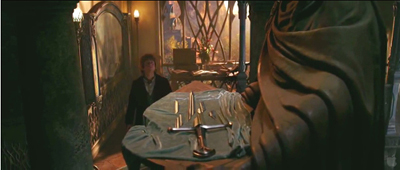
Still from the cut scenes where Bilbo sees broken Narsil in Rivendel

But it also made me think about what will be in part 2 and part 3. From the point where the party is rescued by the great eagles on, the following plot main parts from the book are still to come:

Meeting with Beorn, the forest road, the spiders, the elves, the lake town, entering mount Erebor, talks with Smaug, slaying of Smaug, Battle of the Five Armies and the return home. It is to be expected that the encounter with Smaug and the Battle will be in part 3, so you can see the problem for part 2, because it will be pretty lean on spectacular moments.

Apart from the fight with the spiders and the escape from Lake Town, there isn't much high drama. So it is to be expected that a lot of the stuff from outside the book will be included here.

Most important, I guess will be the attack of the White Council on the Necromancer in Dol Guldur. This can involve some spectacular CGI, even if there isn't a full scale battle with ghouls, skeletons and other undead creatures.

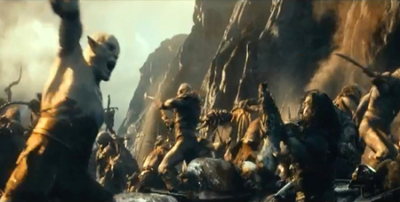
Azog, unwelcome as always
We can also expect Azog to feature at some point, although I don't see an easy point where he can be injected in the story. Maybe as he tries to make his way towards the Lonely Mountain. Or worse, if Jackson has him chasing the dwarves through the forest. As Thompson notes, the creative team around him are very fond of the Defiler and he will probably mess up the whole story more than in part 1.

The only intreaguing thing that he could be involved in are the sparse references to a plot against the dwarves ('who have you told of this?'). It is an interesting take, but I don't see at this point who could have been behind it at this point.

Another thing we might see is Gollum leaving the realm of the Goblin King to find his Precious. In Tolkien's version, this happens later, but I could understand if Jackson advances this point. On the other hand, Gollum has no further use in the plot and no immediate interaction with Gandalf. On the other hand, it could be a way to have Gandalf encounter Aragorn and have him search for Gollum.

But chances are that part two will start slowly with Beorn and the forest road and then see a tumble of action scenes, possibly culminating in the siege of Dol Guldur. That's not a bad thing to look forward to as a fan, but it would probably not be enough if this movie were to stand on it's own.

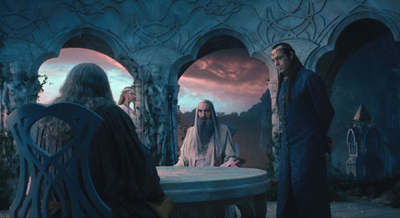
Saruman, victim of hindsight
Also, I still think they've not set up Saruman in the right way. He is depicted as too dodgy, while all he is is extremely arrogant, which he has every right to be, considering that he is the most powerful being in Middle Earth at the time. Why not show Saruman like that? Dismissing Gandalf's evidence of the Necromancer not because he doesn't believe it, but rather because he doesn't like that Gandalf found it rather than him. His pride becomes his folly only after he tries to use the Palantir of Orthanc. I'd preferred if Jackson had kept it that way. Now, because we all know he joins the Dark Side in the end, it is set out too deterministic. Saruman is a lot less interesting that way.

Friday, 11 January 2013

The Hobbit squarely hits the comfort zone

It was only to be expected that Peter Jackson would extend the line from the Lord of the Rings trilogy to the Hobbit and the first part of the Hobbit fully meets these expectations. That is probably why reviews are generally quite flat. This movie shows craftsmanship rather than genius. You can admire the skill with which it's been made but you won't be shocked, overwhelmed, surprised or moved.

This is not a problem as long as you liked the Lord of the Rings, book or movie, and all that goes with it. You can then just continue in that cozy, plush rose garden that you've been looking forward to over the last decade. And that feeling will continue for a few more years as parts two and three appear, followed by extended versions. And then the long wait will start anew, for some adaptation of the Silmarillion or whatever Tolkien's legacy has in store that can be adapted with any chance of commercial success.

As a huge fan of Lord of the Rings since I was 17 I'm one of the core audience for this movie, and Jackson delivers first of all to us, staying true to the imagery of the sequels.  The movie has the dark undertones that Tolkien sought to inject into the Hobbit after the LotR had come out. Luckily the book was saved from that treatment and I can appreciate it for what it is. But the movie, as a prequel, is better for adopting that atmosphere. The setting is pretty grim, but not overburdened with the forboding of the later saga.

Of course, I have my minor qualms about changes to the book. Some are unnecessary, in my opinion. Like the way the trolls are handled. As far as I'm concerned the solution in the book is much funnier. But that is peanuts, especially compared to the Arwen fiasco in LotR. The only thing that comes close is the Rhosgobel Rabbit Express, which is totally ridiculous but thankfully not a recurring item.

The movie is certainly not too long for me, but then again I'm the core audience. I could have stayed there all night if Jackson had so willed it, but if this movie wants to make money it needs to draw in a lot of people who will not just lap up anything about Tolkien. They might think this is overwrought and three movies about this short book is a bit much, even when the movie draws in some stuff from other books.

I read The Hobbit in English first time, but later acquired a Dutch translation. Reads very well

But most of all this movie is a reason to experience it all again. We played Middle Earth Quest again.  It made me reread the Hobbit, much of the early parts and the appendices of LotR and even bits from the Silmarillion. It's wonderful to step into an entire universe with so much behind it and to look at it like a historian or a game designer would, not just as the reader of a novel.

Thursday, 13 December 2012

Prometheus Redeemed in the afterlife?

In June I had this epic rant about Prometheus, Ridley Scott's overpowering Alien prequel. It is a visual and audio spectacle which could keep you glued to your seat by the sheer force speed, light and noise if not for and endless stream of glaring glitches.

Even this Engineer had lost the script

I was exasperated at the inconsistencies, flaws and stupidities in the movie. More so because it is a.spectacular movie in sight and sound, and it poses the interesting questions about the origin of the aliens.

This is by the way very similar to the way aliens have been introduced in Jim Wallman's scifi Universe. Genesplice 9, anyone?

It ripped me up so much I dug in to several theories available online to make sense of it all. This gave some satisfaction, but now finally there is proof, damning proof if you ask me, that everything was there to make this a brilliant movie,.fully consistent and believable. Scott just chose not to make it so.

Comicbookgirl brings together two elements of new knowledge in three youtube videos. They last about 45 minutes in total but are well worth the watch. Start with the first:


First of all, there's a bunch of deleted scenes on the new Blu Ray edition that would have explained a lot about the characters' actions. Much of this is so elemental, you have to question Scott's ability as a director for leaving it out.

Second, the original screenplay has been leaked, and it's very different from the later version. The first version was written by Jon Spaihts, the latter by Damon Lindelof. As Comicbookgirl says, there is a lot to say for the changes in the later script, because they make it a lot more interesting, but the original had more character depth and consistent storytelling. But that would have probably been a bit dull.

At least having the original screenplay around helps understanding the final version.


A different Fifield than we have come to know (and love). A clue to the goo!


For a second I felt this was exactly what Scott had wanted: to release the information necessary to understand the movie bit by bit to maintain the interest (among hardened fans of course, most people will not have bothered with the discontinuities and inconsistencies in the first place). This kind of worked with David Lynch's Mulholland Drive, which I went to see twice in two days because I felt the clues were all there and I just needed to pay attention better. Maybe the same was intended for Inland Empire, but that was just so far off I gave up halfway.

So if you still care for Prometheus go and see these videos by Comicbookgirl

Monday, 20 August 2012

Ray and Fran's 20 questions

Life's slowing down a bit after holidays (I hope you enjoyed the pictures I posted, it was a fun way of updating whilst on the move) and a festival. I hope to have more spare evenings to write posts.

But before resuming normal service, Here's my take at the 20 questions by Ray and Fran

Favourite Wargaming period and why?
Pffff, that's mostly dependent on whether the rules are cool. I'd still love to do Great Paraguyan War and the Risorgimento Wars (1848-1870).

Next period, money no object?
Money is not the problem, as I've made clear from the start. Time is. So money would be spent on getting good painters to do useful stuff and with no time/money constraints I could splash out on terrain and fringe miniatures, like camp followers, wagons and civilians. That's what I always stayed clear off.


Probably I'd prefer a skirmishing period with lots of opportunities for scenario's. When Foundry came out with the beautiful Darkest Africa range, I had this fantasy of doing a campaign with explorers, carriers, slave traders, shady business men, some wild animals and of course a many war parties, both European and African. Add to this terrain and buildings for savannah, desert and rain forest, fortresses and huts...

Oh well. That or a Skaven Mordheim warband with loads of interesting monsters and adventurers for endless roleplaying fun.

Favourite 5 films?
Big Lebowski (that's just like... your opinion, man!)
Once Upon A Time in America (the scene where the kid eats his cake while waiting for the prostitute)
Cross of Iron (My platoon? You are my platoon now)
Once Upon a Time in the West (So you found out you're not a business man after all? Just a man)
Alien


Favourite 5 TV series?
I haven't owned a TV in 20 years, so it'll be old stuff:
The Young Ones
Saphir and Steel
Ren & Stimpy
Jan J de Bom, voorheen de kindervriend
Twin Peaks


Favourite book and author?
Fantasy:
Terry Pratchett - Discworld series

Military history:
Martin van Creveld - Supplying War, not because it's the best book, but because it broke the ground and opened my eyes to the subject of logistics
Archer Jones - The Art of War in the Western World, shaped my view of military history and gave me a framework
Lawrence Keeley - War Before Civilization, shows how politics and graft are a small price to pay for peace

Historical atlasses:
Westerman's Grosser Atlas zur Weltgeschichte, shaped the world for me. I can still draw blind maps of the German states at various points in time. Or classic campaigns and battles. All learned from this book. It also inspired my paper on the Brandenburg West Indian Company (which you probably hadn't heard off).

History:
Jan de Vries - European Urbanization, 1500-1800, I still love those maps of urbanisation at various points in time. Opened my mind to historical geography.
Charles Tilly - Coercion, Capital and European States, AD 990-1992, on the link between warfare, urbanisation and state formation. Notice the link to Van Crevelds Supplying War!


Greatest General? Can’t count yourself!!
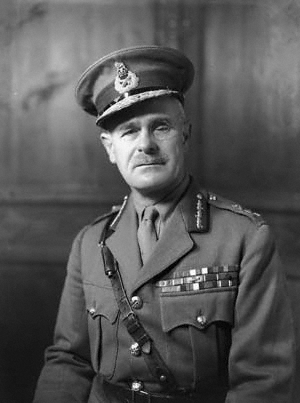
I have a fascination with Wavell, and his challenges in 1940/1: Western Desert, East Africa, Iraq, Syria, Greece, Crete. Probably not the greatest, but those are not always the most interesting.


Favourite Wargames rules?
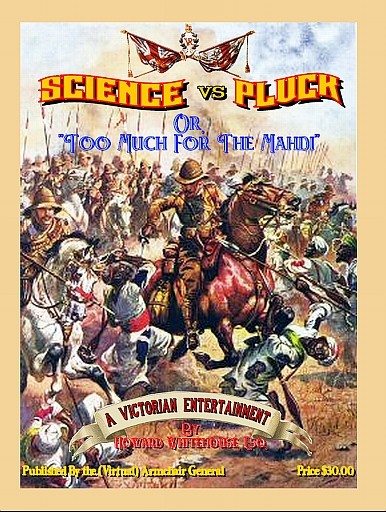
Science vs Pluck
Bag the Hun (1st Edition)


Favourite Sport and team?
(field) hockey. I sort of support/follow Fiorentina in the Serie A, QPR in the Premier League, the Canucks in the NHL, England in cricket.

If you had a only use once time machine, when and where would you go?
The Big Bang, to go out with a bang!

Last meal on Death Row!
Hemlock

Fantasy relationship and why?
Cameron Diaz. That smile


If your life were a movie, who would play you?
Michael Fassbender


Favourite Comic Superhero?
Dylan Dog - Indigatore de l'incubi


Favourite Military quote?
"C'est magnifique, mais c'est ne pas la guerre" - French General Bosquet, while watching the charge of the Light Brigade at the battle of Balaclava.

Historical destination to visit?
Inca remains and battlefields of the Wars of Liberation in the Andes

Biggest Wargaming Regret?
All the unfinished projects

Favourite Fantasy job?
Corporate PR at Barclays Bank - a challenge

Favourite Song, Top 5?
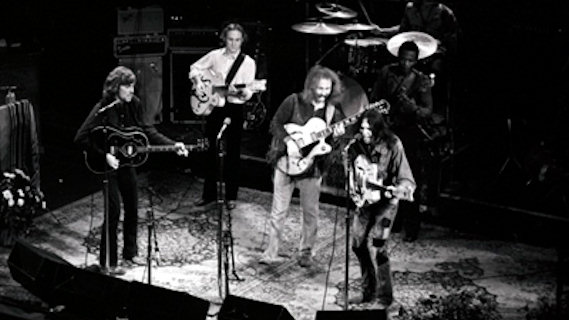
Crosby, Stills, Nash & Young - The Lee Shore
Rolling Stones - Gimme Shelter
The The - Kingdom of Rain
Neil Finn - Try Whistling This acoustic version on some radio show
Beatles - Dear Prudence
Wilco - Impossible Germany


Favourite wargaming moment!
Kirovograd megagame, January 1994. A life changing experience that got me hooked on megagaming.

The miserable Git question, what upsets you?
Don't get me started

Thursday, 5 July 2012

Return to LV223 - Not that you'd want to

I got some interesting reactions to my Prometheus post on Fortress Ameritrash and I'd like to share some of that with you. Obviously I made some mistakes.


Here's the Engineer, trying to make sense of the movie

My reaction to the many inconsistencies in the movie has been done much better by ComicBookGirl at the basic level and about the ideas and mythos behind the movie.

A longer list of basic inconsistencies by Red Letter Media

This guy Cavalorn has tried to make sense of the mythos, tying it in to the Prometheus story. Quite probably a lot of this works, but I think he overestimates Scott's consistency and thus drives off into the ridiculous. Good try and interesting take, though.

The Film Crit Hulk makes short work of the pretentious script of the movie and shows the inconsistencies in the movie go beyond the ones I pointed out. There's even inconsistencies in the mythos behind it. Although this is way too long and the CAPS might piss you off, have a try at parts #2 and #3,

The planet in Prometheus is LV-223, which is not the same planet as LV-426 where the Nostromo lands. So no continuity problems there.

It seems logical that the black goo in the movie is the same in all instances but acquires different characteristics in different circumstances. But breaking down the DNA and then dissoving the Engineer is really something different than turning you into a violent monster. Can't get my head around that.

I now think that indeed the movie proposes some kind of Space Jesus theory. However, even if the Engineers decide to erase humanity for dismissing and killing Space Jesus, that does not explain how the Engineers got infected with something they were creating themselves. What could the humans have done to cause this outbreak?

And finally, this is just a teaser, cut parts from the opening scene?


So what does that leave me with?
1) Shaw is a droid. No human being could have gone through all that and fly off into deep space without as much as breather. And it is a bit of a give away that she's not able to breed...
2) to be revealed in the mequel (ie inbetween Prometheus and Alien) to make sense of it all

Wednesday, 27 June 2012

Prometheus: Ridley Scott won't have his liver picked for this one

Just come back from Prometheus on the big screen in 3D. And just as expected it's a visual spectacle. Some images will last me a long time. Beautiful, scary, just wow.

The sound (as separate from the music) is awesome as well. You are really trembling in your seat when a spaceship blasts overhead.

And it's well paced in terms of action, building up in steady crescendo. It's a chain reaction with few let ups. I'm still releasing tension. So that part of the movie worked very well.

Plotwise, well...

...spoilers from here

The actions of the scientists are just unbelievable unprofessional. No archeologist worth his salt would interfere with the find. Noone would just take of their helmets (especially not later, when you've decided this is a hostile environment).

Also, how can two men get lost in a system that is being mapped by one of them, and while they have constant contact with the ship's crew?

Since when do biologists try to make friends with animals clearly showing their not friendly when you know the environment is hostile?

Why does the captain leave his post when there are lifeforms at large and two of his men out when he know something bad has happened out there?

Why does the face of the decapitated alien look serene, rather than smashed?

But more basically: why are cannisters with very dangerous weaponry neatly arrayed in a room with ceremonial function? And why would people try to hide there?

And how does the captain suddenly understand that the base is meant as a WMD production facility? He hasn't been down in the base and not put any time into tying all the ends together, rather the opposite. He's ignored lots of info.

Ok, suppose you just auto-removed an alien embryo and then had your belly stapled... You then run into the guy that's tried to freeze you in while carrying the embryo. You then just talk to him? You don't try and put a bullet in his head?

And you don't tell anybody of the squid lingering in the operation room? Not even the cleaner?

I also see serious issues of continuity with Alien (the sequel). The guy they're supposed to find in the control room (I always thought he was manning the gun, but that's another story) in Alien. has left. In Alien, nobody notices the remnants of the Prometheus, close by, let alone the human remains of the prometheus crew in the control room.

And actingwise, the performance by David the android with his love for Lawrence of Arabia is very good. All the other roles, I think, are forgettable.

oh well...

I just don't know why Scott chose to go this way. The original Alien works much better in terms of suspense and pacing, while at the same time keeping the movie coherent. The acting gets much more time to shine making it interesting from that point of view as well. This all makes the choices and actions of those involved much more believable.

Is the modern blockbuster just incapable of telling a good story, so as not to interfere with the action sequences? Makes me sad.

But let's start on a positive note: the Engineer at the start of the movie, who drinks a cup and dissolves. What was he drinking. Why did he do it? Guilt? Suicide? As a means to start the outbreak? Fascinating and unresolved in the movie.

This is just my take. There's a much better review from a more cinematically versed Scott fan that I really recommend.